Skip to content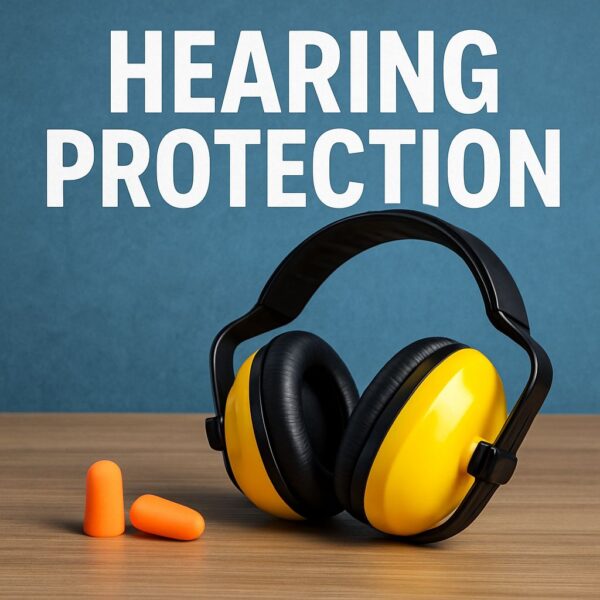
Article-At-A-Glance
- Workplace noise exposure can permanently damage hearing, but occupational hearing loss is often preventable.
- NIOSH recommends an occupational noise exposure limit of 85 dBA averaged over eight hours, while OSHA requirements depend on the applicable workplace standard and exposure circumstances.
- Hearing protection should be selected according to measured noise exposure, required attenuation, fit, comfort, communication needs, and compatibility with other personal protective equipment.
- The Noise Reduction Rating (NRR) is a laboratory-derived rating and should not be assumed to represent the exact protection an individual worker receives.
- NIOSH now recommends individual quantitative fit testing to determine how much attenuation a worker actually receives from a hearing protector.
- Engineering and administrative controls should be considered before relying solely on hearing protection whenever workplace noise can be reduced at its source or along its path.
Occupational noise can gradually damage hearing without causing immediate pain or obvious warning signs.
Workers in construction, manufacturing, agriculture, transportation, utilities, entertainment, public safety, aviation, maintenance, and many other industries may encounter hazardous sound levels.
Earplugs and earmuffs can be important parts of hearing-loss prevention, but hearing protection works only when the device is appropriate for the exposure, fits correctly, is worn consistently, and is maintained properly.
This guide explains the fundamentals of workplace hearing protection. Employers and workers should also follow the occupational-safety regulations, exposure assessments, and hearing-conservation requirements that apply to their particular workplace.
How Occupational Noise Can Damage Hearing
Sound entering the ear ultimately stimulates sensory hair cells within the cochlea of the inner ear.
Excessive noise can injure these sensory structures and other parts of the auditory system. Repeated exposure can produce permanent noise-induced hearing loss, while extremely intense sound can sometimes cause immediate acoustic injury.
Noise-induced hearing loss commonly affects frequencies important for speech understanding, which is one reason people may initially notice that speech sounds unclear even though they can still hear that someone is talking.
Noise exposure can also contribute to tinnitus.
Learn more about hearing protection and preventing avoidable noise exposure.
How Loud Is Too Loud?
Workplace noise limits cannot accurately be reduced to a statement that one particular decibel level is the universal dividing line between “safe” and “dangerous.”
Risk depends on both sound level and exposure duration.
NIOSH Recommended Exposure Limit
The National Institute for Occupational Safety and Health (NIOSH) recommends an occupational noise exposure limit of 85 dBA as an eight-hour time-weighted average.
NIOSH uses a 3-dB exchange rate. Under this approach, each 3-dB increase represents a doubling of sound energy and cuts the recommended exposure duration in half.
For example, under the NIOSH approach, an exposure of 88 dBA has a shorter recommended duration than an exposure of 85 dBA.
OSHA Requirements
OSHA occupational-noise requirements differ from the NIOSH recommended exposure limit.
For general industry, OSHA’s permissible exposure limit is 90 dBA as an eight-hour time-weighted average using a 5-dB exchange rate. OSHA also requires a hearing conservation program in general industry when employee exposure equals or exceeds an eight-hour time-weighted average of 85 dBA.
Different OSHA standards can apply to construction, maritime work, and other employment settings.
For that reason, workers and employers should not use a simplified chart from a general health website as a substitute for workplace noise measurement or compliance with the applicable occupational-safety standard.
Controlling Noise Comes Before Relying on Earplugs
Hearing protectors are important, but personal protective equipment is not always the preferred first method of controlling occupational noise.
Depending on the workplace and applicable requirements, noise exposure may be reduced through engineering or administrative controls.
Examples of engineering controls include:
- Replacing unusually noisy equipment
- Installing barriers or enclosures
- Isolating vibration
- Maintaining machinery to reduce unnecessary noise
- Increasing distance between workers and noise sources when feasible
- Using quieter processes or tools
Administrative controls may include changing work practices, limiting time in particular exposure areas, or scheduling noisy operations to reduce the number of workers exposed.
Hearing protection may then provide another layer of protection when hazardous exposure remains.
The Main Types of Hearing Protection
Common hearing protectors include earplugs, earmuffs, and semi-insert devices such as canal caps or hearing bands.
Each has advantages and limitations.
Disposable Foam Earplugs
Slow-recovery foam earplugs are compressed before insertion and expand inside the ear canal.
Potential advantages include:
- Small size
- Compatibility with many helmets and other forms of PPE
- High attenuation when correctly fitted
- Low cost
Their effectiveness depends heavily on insertion technique and individual ear anatomy.
A high laboratory NRR does not guarantee that a poorly inserted foam plug provides adequate protection.
Reusable Earplugs
Reusable earplugs are generally preformed and can be cleaned and reused according to manufacturer instructions.
They can be useful for workers who frequently remove and reinsert hearing protection.
Fit still matters. Different sizes and designs may be necessary because ear canals vary substantially among individuals.
Custom-Molded Earplugs
Custom hearing protectors are made to fit an individual’s ears.
They may be useful for people who have difficulty obtaining a consistent fit with standard devices or who wear hearing protection for long periods.
Custom devices do not automatically provide greater attenuation than every disposable earplug. Their potential advantage is often comfort and repeatable fit.
Earmuffs
Earmuffs surround the outer ear with sound-attenuating cups and cushions.
Advantages can include:
- Relatively simple visual inspection
- Easy removal and replacement
- No insertion into the ear canal
- Potential usefulness for intermittent exposure
Disadvantages can include heat, weight, and interference from other equipment.
Anything that prevents the earmuff cushion from sealing properly against the head can reduce attenuation.
Canal Caps and Semi-Insert Protectors
Semi-insert protectors generally use pods or tips positioned at or near the entrance of the ear canal and connected by a band.
They can be convenient in environments where hearing protection must be removed and replaced frequently.
The suitability of any semi-insert protector depends on the required attenuation and the device’s actual fit.
Understanding the Noise Reduction Rating
Hearing protectors sold in the United States commonly display a Noise Reduction Rating, or NRR.
The NRR is based on standardized laboratory testing. It should not be interpreted as a guarantee that every worker will receive that exact number of decibels of protection.
Actual attenuation can be affected by:
- Earplug insertion depth
- Ear anatomy
- Earmuff cushion seal
- Other PPE
- Hair or objects beneath earmuff cushions
- Device condition
- Training
- Whether the protector is worn consistently
Be Careful With Simplified NRR Formulas
Various occupational-safety methods have historically been used to estimate workplace attenuation from laboratory NRR values.
OSHA guidance includes different calculations depending on how exposure was measured and the purpose for which attenuation is being evaluated.
Therefore, the frequently repeated instruction to simply “subtract 7 and divide by two” should not be treated as a universal OSHA formula for every situation.
Employers responsible for occupational-noise compliance should use the applicable OSHA standard and current agency guidance rather than relying on a simplified online calculation.
NIOSH Now Recommends Individual Fit Testing
NIOSH updated its hearing-protector guidance in 2025.
Instead of relying on its older generalized NRR derating scheme, NIOSH now recommends individual quantitative fit testing to evaluate the attenuation each worker receives from a hearing protector.
Fit-testing systems can produce a Personal Attenuation Rating, often called a PAR.
This approach is valuable because two people wearing the same model of earplug can receive very different amounts of protection.
Fit testing can help determine whether:
- The protector fits the individual worker
- The worker is inserting or wearing it correctly
- Additional training is needed
- A different size or model would be more appropriate
- The achieved attenuation is appropriate for the measured exposure
Avoid Both Underprotection and Unnecessary Overprotection
The goal of hearing protection is not simply to purchase the device with the highest available NRR.
A protector must reduce hazardous noise sufficiently while still allowing the worker to perform the job safely.
Excessive attenuation can sometimes make communication, equipment sounds, or warning signals more difficult to hear.
Selection should therefore consider the actual exposure and job requirements.
When Dual Hearing Protection May Be Needed
Dual protection means wearing earplugs and earmuffs at the same time.
NIOSH recommends double hearing protection for workers whose eight-hour time-weighted-average exposures exceed 100 dBA.
OSHA also recognizes that some exposures require dual protection to achieve adequate attenuation.
However, the protection from plugs and muffs cannot simply be added together.
OSHA’s estimation method for dual protection generally begins with the higher-rated protector and adds a limited additional allowance for the second protector.
The appropriate requirement should be determined from measured exposure and the applicable occupational-safety standard rather than assuming that every instantaneous noise reading above 100 dBA automatically creates the same requirement.
How to Fit Foam Earplugs
Always follow the instructions supplied with the particular hearing protector.
For many roll-down foam earplugs, the general process includes:
- Begin with clean hands.
- Roll the foam plug into a narrow cylinder without folding or creasing it.
- Reach over the head with the opposite hand and gently pull the outer ear upward and backward to help straighten the ear canal.
- Insert the compressed plug into the canal.
- Hold it in place while the foam expands.
- Check that the plug is seated securely and comfortably.
A plug that is barely inserted at the opening of the canal may provide substantially less protection than expected.
Individual fit testing provides a much better assessment of protection than judging insertion solely by appearance.
How to Fit Earmuffs
Earmuffs should fully surround the ears and maintain a continuous seal against the head.
Before use:
- Center the cups over the ears
- Adjust the headband according to manufacturer instructions
- Keep hair and other objects from interfering with the cushion when practical
- Check cushions for damage, hardening, or deterioration
- Confirm compatibility with other required PPE
Safety glasses, helmet systems, respirator components, clothing, or other equipment can affect the seal depending on their design and how they are worn.
The effect should be evaluated rather than assuming a particular fixed number of decibels of lost protection.
Compatibility With Other Personal Protective Equipment
Workers may need hearing protection at the same time as helmets, eye protection, respirators, welding equipment, or face shields.
These combinations should be considered when selecting hearing protectors.
Hard Hats and Helmets
Some workplaces use earmuffs designed specifically to attach to compatible safety helmets.
Compatibility should be verified for the specific helmet and earmuff combination rather than assuming that any attachment will provide the labeled protection.
Safety Glasses
Eyewear temples that pass beneath an earmuff cushion can affect the acoustic seal.
The amount of attenuation lost depends on the particular eyewear, earmuff, fit, and worker.
Respiratory Protection
Respirator straps and hearing-protection headbands should be arranged according to manufacturer instructions so that neither protective system is compromised.
When both respiratory and hearing protection are required, the entire PPE combination should be evaluated together.
Electronic Hearing Protection
Electronic hearing protectors can provide capabilities beyond those of conventional passive earplugs and earmuffs.
Features vary considerably among products.
Level-Dependent Hearing Protection
Some electronic protectors use external microphones to help the wearer hear lower-level environmental sounds while limiting amplified output as sound levels increase.
These devices can be useful when communication and situational awareness are important.
They should still be evaluated according to their certified protective performance and suitability for the exposure.
Active Noise Reduction
Some devices use active noise-reduction technology that generates an opposing acoustic signal to reduce certain types of sound inside the earcup.
Active systems tend to be most effective for particular low-frequency, relatively steady sounds and should not be assumed to eliminate hazardous noise generally.
Communication Systems
Some occupational hearing protectors integrate radios, wired communication, or wireless connectivity.
These systems can reduce the temptation to remove hearing protection in order to communicate.
Communication capability does not replace the need to verify that the protector provides adequate attenuation.
Hearing Protection for Impulse Noise
Gunfire, explosive events, impact tools, and some industrial processes can produce very high peak sound levels.
Impulse noise requires careful exposure assessment because conventional eight-hour averages do not fully describe every aspect of the hazard.
Workers exposed to gunfire or other intense impulses should use hearing protection selected for the specific exposure and applicable occupational or range-safety requirements.
Dual protection may be appropriate in high-level impulse-noise environments.
Hearing Protection for Musicians and Entertainment Workers
Musicians, sound engineers, venue employees, and other entertainment workers can also experience hazardous noise exposure.
Conventional foam plugs may alter the perceived frequency balance of music.
Musician-style or relatively flat-attenuation protectors are designed to reduce sound while attempting to preserve a more natural spectral balance.
Custom options are also available through hearing-care professionals.
The correct attenuation should still be based on measured exposure rather than simply choosing the least noticeable protector.
Cleaning and Replacing Hearing Protectors
There is no universal replacement schedule that applies to every earplug or earmuff.
Follow the manufacturer’s cleaning, maintenance, storage, and replacement instructions.
Disposable Earplugs
Products labeled for single use should be discarded according to manufacturer instructions rather than reused indefinitely.
Reusable Earplugs
Reusable plugs should be cleaned as directed and replaced when they become damaged, hardened, deformed, contaminated, or unable to maintain an appropriate fit.
Earmuffs
Inspect earmuffs regularly for:
- Cracked or hardened cushions
- Damaged cups
- Reduced headband tension
- Contamination
- Missing components
- Other conditions that could interfere with the seal or protective performance
Replace cushions or other components according to manufacturer recommendations and when deterioration is identified.
Hearing Protection in Cold, Hot, and Dirty Environments
Environmental conditions can affect comfort, hygiene, and equipment performance.
Workers in extreme temperatures or contaminated environments should use hearing protectors specifically suited to those conditions and follow the manufacturer’s instructions.
Avoid universal claims that a particular cushion material, earplug style, or replacement interval is always appropriate for cold weather or industrial contamination.
Where fit is uncertain, individual fit testing can provide objective information about the protection achieved.
Training Matters
Workers should understand why hearing protection is required and how to select, fit, use, inspect, and maintain the devices provided.
Hands-on fitting instruction can be particularly valuable for earplugs because small differences in insertion can produce substantial differences in attenuation.
NIOSH’s current recommendation for individual quantitative fit testing provides employers with a way to combine training with objective confirmation of the protection each worker receives.
Hearing Conservation Programs
Hearing protection is only one component of an occupational hearing-loss prevention program.
Depending on the workplace and applicable regulations, a hearing conservation program may include:
- Noise exposure monitoring
- Engineering and administrative controls
- Hearing-protector selection
- Employee training
- Audiometric testing
- Recordkeeping
- Evaluation of hearing changes
- Program review
In OSHA-covered general industry workplaces, a hearing conservation program is required when employee exposure equals or exceeds an eight-hour time-weighted average of 85 dBA.
Employers should consult the OSHA requirements that apply specifically to their industry.
Choosing Hearing Protection for a Workplace
Rather than choosing by brand or purchasing the product with the largest NRR printed on the package, consider:
- Measured employee noise exposure
- Required attenuation
- Fit
- Comfort during the actual work shift
- Compatibility with helmets, eyewear, respirators, and other PPE
- Communication requirements
- Temperature and environmental conditions
- Hygiene
- Frequency of removal and reinsertion
- Individual worker preferences and anatomy
- Results of individual fit testing when available
Providing workers with appropriate choices can help improve consistent use.
When to Have Your Hearing Checked
Workers enrolled in regulated hearing-conservation programs may receive occupational audiometric testing according to the applicable requirements.
Outside those programs, anyone who notices persistent hearing difficulty, tinnitus, or a meaningful change in hearing should consider evaluation by an appropriate healthcare professional.
Sudden hearing loss, particularly in one ear, requires prompt medical evaluation.
Frequently Asked Questions
Does Noise Above 85 dBA Always Require Hearing Protection?
Not based on a single instantaneous reading alone.
Occupational noise risk and regulatory requirements depend on sound level, duration, time-weighted exposure, industry, and the applicable standard.
NIOSH recommends limiting occupational exposure to 85 dBA averaged over eight hours, while OSHA requirements use different criteria.
What Is the Difference Between OSHA’s 90 dBA Limit and the 85 dBA Action Level?
For general industry, OSHA’s permissible exposure limit is 90 dBA as an eight-hour time-weighted average.
The 85 dBA level is important because OSHA’s general-industry hearing-conservation requirements begin at an eight-hour time-weighted average exposure of 85 dBA.
NIOSH separately recommends an occupational exposure limit of 85 dBA over eight hours using a more protective 3-dB exchange rate.
Should I Subtract 7 From the NRR and Divide by Two?
Do not treat that calculation as a universal rule.
OSHA uses specific NRR calculations depending on the measurement method and regulatory purpose. Its guidance includes a 7-dB adjustment when A-weighted exposure data are used and, in certain contexts, an additional 50% safety factor.
NIOSH updated its policy in 2025 and now recommends individual quantitative fit testing rather than relying on its older generalized NRR derating approach.
When Should Earplugs and Earmuffs Be Worn Together?
Dual protection may be needed when one hearing protector cannot provide sufficient attenuation.
NIOSH recommends dual protection when eight-hour time-weighted-average occupational exposure exceeds 100 dBA.
OSHA also recognizes dual protection when necessary to reduce exposure adequately.
The exact requirement should be based on measured exposure and applicable occupational-safety requirements.
Does Wearing Earplugs and Earmuffs Double the Protection?
No.
The attenuation ratings cannot simply be added together.
OSHA’s method for estimating dual protection generally uses the higher-rated device and adds a limited additional allowance for the second protector.
Are Earmuffs Better Than Earplugs?
Neither type is universally better.
Earplugs may work well with helmets and other PPE and can provide high attenuation when fitted correctly.
Earmuffs may be easier for some people to put on consistently and can be convenient for intermittent exposure.
The best choice is one that provides appropriate verified protection and can be worn correctly throughout the exposure.
Are Custom Earplugs Better Than Foam Earplugs?
Not necessarily.
A correctly fitted foam earplug can provide substantial attenuation. Custom protectors may offer advantages in comfort, repeatability, and fit for some individuals.
Individual fit testing is a better way to determine actual protection than assuming one design is inherently superior.
Can Safety Glasses Reduce Earmuff Protection?
They can if the eyewear interferes with the cushion seal.
The amount of reduction depends on the particular eyewear, earmuff, and fit. Avoid assuming that every pair of glasses causes a fixed loss of attenuation.
How Often Should Earmuff Cushions Be Replaced?
Follow the manufacturer’s instructions and replace components when they are worn, damaged, hardened, contaminated, or no longer maintain an appropriate seal.
A universal six- or twelve-month replacement schedule is not appropriate for every product and workplace.
Can Hearing Protection Cause Ear Infections?
Hearing protectors themselves do not inevitably cause ear infections.
However, contaminated earplugs, dirty hands, moisture, skin irritation, or poor hygiene may contribute to ear-canal problems in some users.
Reusable devices should be cleaned and maintained according to manufacturer instructions. Persistent ear pain, drainage, itching, or inflammation deserves appropriate medical evaluation.
Can Noise-Induced Hearing Loss Be Reversed?
Permanent sensorineural hearing loss caused by noise generally cannot be restored to normal with current treatment.
Hearing aids and other hearing technologies can improve access to sound and communication for many people, but they do not regenerate lost cochlear sensory cells.
This makes prevention of avoidable hazardous noise exposure particularly important.
Reliable Sources and Further Reading
- Occupational Safety and Health Administration — Occupational Noise Exposure
- OSHA Technical Manual — Noise
- National Institute for Occupational Safety and Health — Occupational Noise Exposure
- NIOSH — Individual Fit-Testing Recommendation for Hearing Protection Devices
- National Institute on Deafness and Other Communication Disorders — Noise-Induced Hearing Loss
Apex Provides Education, Not Workplace Compliance Advice
Apex Brain & Hearing Health provides general educational information about occupational noise, hearing protection, and hearing health.
This guide is not a substitute for workplace noise assessment, an employer’s hearing-conservation program, professional industrial-hygiene services, manufacturer instructions, or the occupational-safety regulations applicable to a particular workplace.
Employers and workers should consult current OSHA requirements and qualified occupational-safety professionals when determining workplace compliance and required hearing protection.