Skip to content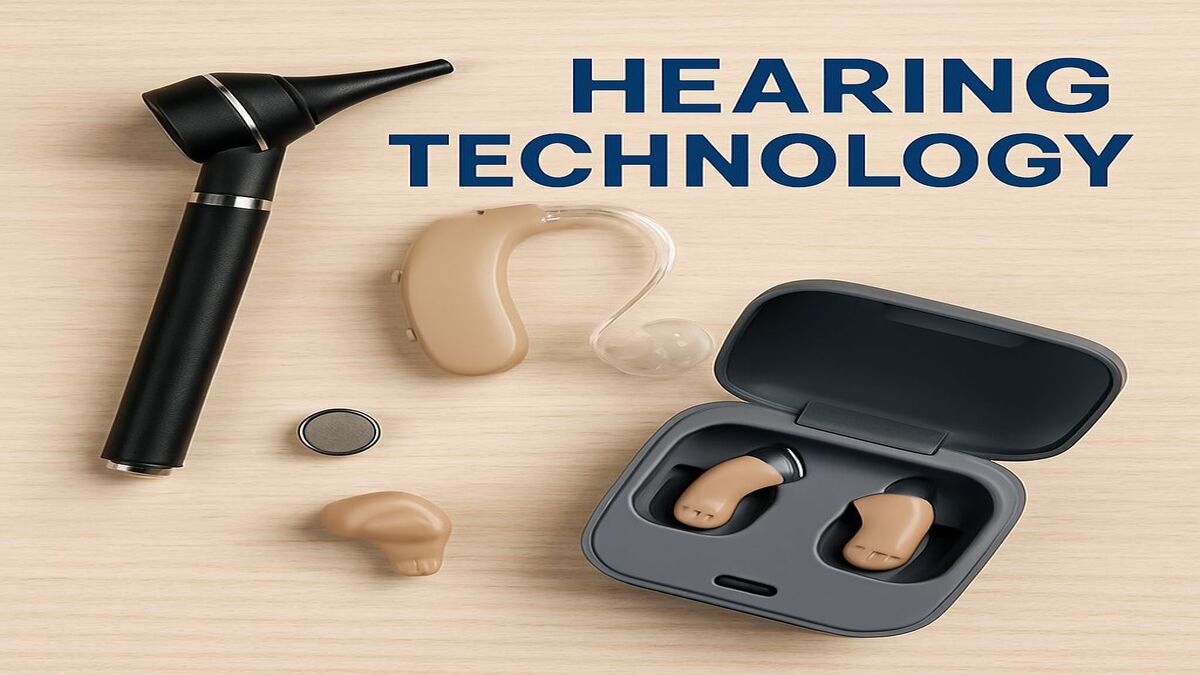
Article-At-A-Glance
- Modern hearing aids are digital devices that can provide frequency-specific amplification, noise management, directional processing, wireless connectivity, and other features.
- The right hearing technology depends on the type and degree of hearing loss, communication needs, listening environments, physical abilities, preferences, and budget.
- Over-the-counter hearing aids are an option for adults age 18 and older with perceived mild to moderate hearing loss, while prescription devices can address a broader range of hearing needs.
- Features such as directional microphones, rechargeable batteries, Bluetooth connectivity, remote adjustments, and smartphone controls can improve convenience or listening performance for appropriate users.
- Good hearing-aid outcomes depend on more than technology level. Appropriate selection, fitting, verification, counseling, realistic expectations, and follow-up can all matter.
Hearing aids have changed substantially from the simple analog amplification devices many people remember.
Modern devices can analyze incoming sound, provide different amounts of amplification across frequencies, reduce certain unwanted sounds, emphasize sounds coming from particular directions, stream audio from compatible devices, and automatically adjust some settings as the listening environment changes.
Those capabilities can be useful, but more features do not automatically mean better hearing for every person. The goal is to select technology that matches the individual’s hearing and communication needs.
How Modern Hearing Aids Work
A hearing aid generally includes microphones, digital processing circuitry, an amplifier, and a receiver that delivers sound to the ear.
The microphones collect acoustic sound and convert it into an electrical signal. Modern digital hearing aids then convert and process that information digitally.
The hearing aid can apply frequency-specific amplification and other processing before the receiver converts the processed signal back into acoustic sound.
Digital Signal Processing
Digital signal processing, commonly called DSP, is fundamental to modern digital hearing aids.
DSP allows hearing aids to process sound differently across portions of the frequency range rather than simply making every incoming sound louder by the same amount.
Depending on the device, digital processing can support features such as:
- Frequency-specific amplification
- Compression
- Feedback management
- Noise management
- Directional microphone processing
- Automatic listening programs
- Frequency lowering or related processing
- Wireless audio and accessory integration
Manufacturers use different processing architectures, algorithms, fitting systems, and terminology. Technical specifications such as the number of processing channels should not be treated as a simple measure of hearing-aid quality.
More channels do not automatically produce better speech understanding or more natural sound. Overall device design, fitting accuracy, signal processing, and the user’s hearing needs are more important than a single specification.
Hearing Aids Are Not Simply Sound Amplifiers
A properly fitted hearing aid is designed to provide amplification according to the user’s hearing needs rather than increasing every sound equally.
For example, a person may need substantially more amplification at some frequencies than others.
Modern hearing aids also use compression systems that change the amount of amplification according to the level of incoming sound. This helps keep soft sounds audible while preventing louder sounds from becoming unnecessarily uncomfortable.
However, hearing aids cannot restore normal hearing or completely separate speech from every competing sound. Their benefit varies among individuals and listening situations.
Prescription and Over-the-Counter Hearing Aids
Adults in the United States now have both prescription and over-the-counter hearing-aid options.
OTC hearing aids are intended for people age 18 and older who perceive that they have mild to moderate hearing loss. They can be purchased without a medical examination, prescription, or mandatory visit to a hearing professional.
Prescription hearing aids can be appropriate across a broader range of hearing losses and are fitted through hearing-care professionals operating within their professional scope and state requirements.
| Consideration | Prescription Hearing Aids | OTC Hearing Aids |
|---|---|---|
| Intended users | Can address a broad range of hearing needs | Adults 18+ with perceived mild to moderate hearing loss |
| Professional involvement | Typically includes professional evaluation, fitting, and follow-up | Professional involvement is not required |
| Adjustment | Programmed and adjusted according to professional evaluation and fitting procedures | Usually adjusted or self-fitted by the consumer |
| Verification | Professional verification procedures may be used | Varies by product and care pathway |
| Follow-up | Professional follow-up is commonly available | Support varies considerably among manufacturers and sellers |
It is inaccurate to say that prescription hearing aids universally outperform OTC devices for everyone with hearing loss.
Some adults with uncomplicated perceived mild to moderate hearing loss may benefit from appropriately selected OTC hearing aids. Others may need or prefer professional evaluation and prescription technology.
Learn more in Hearing Aids: The Complete Guide.
When Professional Hearing Evaluation Is Especially Important
OTC hearing aids are not intended to replace medical or audiological evaluation when symptoms suggest that something more than uncomplicated age- or noise-related hearing difficulty may be occurring.
Professional evaluation is particularly important for concerns such as:
- Sudden or rapidly changing hearing loss
- A substantial difference in hearing between the ears
- Ear pain or drainage
- Recurrent or significant dizziness
- Visible ear abnormalities
- Hearing difficulty that is greater than expected from an OTC device’s intended range
- Difficulty understanding speech that seems disproportionate to hearing thresholds
- Other concerning neurological or ear-related symptoms
Sudden hearing loss can require prompt medical attention and should not simply be treated by purchasing a hearing aid.
Understanding Hearing-Aid Technology Levels
Hearing-aid manufacturers and clinics often group devices into categories such as basic, standard, mid-level, premium, or advanced.
These categories are primarily commercial groupings rather than universal scientific classifications. There is no industry-wide rule defining exactly what a “basic,” “mid-level,” or “advanced” hearing aid must contain.
Entry-Level Technology
Less expensive prescription models may provide core amplification, feedback management, directional processing, and noise-management features without every premium option available in a manufacturer’s product family.
For someone whose listening needs are relatively straightforward, this may be sufficient.
Mid-Range Technology
Mid-range models may add more sophisticated automatic processing, connectivity options, listening programs, or noise-management capabilities.
These features can be useful for people who regularly move among different listening environments.
Premium Technology
Premium models generally contain a manufacturer’s broadest feature set and most sophisticated processing options.
Depending on the product, these may include advanced environmental classification, wireless connectivity, rechargeable power, accessory integration, remote support, motion sensing, or other features.
Premium technology is not automatically necessary for everyone. A properly fitted less expensive hearing aid can be a better choice than a premium model whose additional features provide little practical benefit to the user.
13 Hearing-Aid Features Worth Understanding
1. Digital Signal Processing
Digital processing allows hearing aids to provide different amplification and processing across the frequency range.
The important question is not simply how many processing channels a device advertises. It is whether the hearing aid can be appropriately fitted to the user’s hearing loss and communication needs.
2. Automatic Environmental Adjustment
Many hearing aids can analyze characteristics of the listening environment and automatically modify certain settings.
A device may respond differently in quiet conversation, speech in noise, music, wind, or other acoustic environments.
Manufacturers increasingly use machine-learning or artificial-intelligence terminology to describe some of these systems. The specific capabilities vary by model.
3. Noise Management
Digital noise-reduction systems attempt to identify acoustic patterns associated with steady or competing noise and reduce their prominence.
These systems can improve listening comfort and may help in certain situations, but they cannot completely remove background noise while leaving speech untouched.
Speech and competing noise often overlap in frequency and time, which limits what any hearing aid can accomplish.
4. Directional Microphones
Directional microphone systems can emphasize sound arriving from some directions while reducing sensitivity to sound from others.
This can improve the signal-to-noise ratio in appropriate situations, particularly when the desired speaker and competing noise come from different directions.
Adaptive systems may automatically change their directional pattern according to the acoustic environment.
Learn more about hearing in noisy environments.
5. Individualized Programming
Prescription hearing aids can be programmed according to hearing-test results and validated fitting targets.
Programming can also account for listening preferences, comfort, hearing-aid experience, and individual communication goals.
Some hearing aids provide multiple listening programs for situations such as music, speech in noise, or other specialized environments.
6. Wireless Connectivity
Many modern hearing aids can receive audio wirelessly from compatible phones, tablets, televisions, remote microphones, and other devices.
Compatibility varies considerably by hearing-aid model, smartphone, operating system, wireless standard, and accessory.
Consumers should confirm compatibility for the exact hearing aid and device they intend to use rather than assuming that any hearing aid advertised as “Bluetooth” will connect to everything.
7. Smartphone Applications
Many manufacturers provide companion smartphone apps.
Depending on the device and app, controls may include:
- Volume adjustment
- Program selection
- Battery status
- Sound-quality adjustments
- Accessory controls
- Remote professional support
- Device-location assistance
Available features change frequently as manufacturers update products and software, so current compatibility should be verified before purchase.
8. User-Selectable Listening Programs
Some hearing aids allow users to switch among programs created for different listening situations.
Examples might include general listening, music, speech in noise, or telecoil use.
Other devices rely more heavily on automatic processing and may require little manual program switching.
9. Rechargeable Batteries
Rechargeable hearing aids have become widely available and can reduce the need to handle small disposable batteries.
Actual battery life depends on the device, battery condition, wireless streaming, accessory use, environmental conditions, and other factors.
People who rely heavily on wireless streaming should consider expected battery performance under their own usage pattern rather than relying only on maximum manufacturer estimates.
10. Tinnitus Sound Features
Some hearing aids include optional sound-generation features intended for tinnitus management.
Depending on the device, these may provide broadband noise, shaped sounds, or other sound options.
Sound therapy can be one component of tinnitus management, but hearing-aid tinnitus features are not a cure and do not work equally well for everyone.
For people who have both tinnitus and hearing loss, amplification itself may sometimes reduce the prominence of tinnitus by increasing access to environmental sound.
Learn more in Tinnitus: The Complete Guide.
11. Motion, Activity, and Safety Features
Some hearing aids include motion sensors or other features that can support activity tracking, fall alerts, or related functions.
These capabilities are product-specific and should not be assumed to be available on all premium hearing aids.
They should also not be treated as replacements for dedicated medical monitoring or emergency-response systems when those services are needed.
12. Remote Adjustments
Some hearing-care systems allow a professional to make certain hearing-aid adjustments remotely.
This can be particularly useful for people who live far from their hearing-care provider, have transportation limitations, or need relatively minor programming changes.
The exact services available depend on the hearing aid, software platform, professional, licensing requirements, and clinical situation.
13. Water and Dust Resistance
Many current hearing aids are designed to resist moisture and dust, but resistance levels vary.
An IP rating describes specific laboratory-tested protection against solid particles and water. An IP68 rating does not automatically mean a hearing aid can be treated as completely waterproof under every real-world condition.
Users should follow the manufacturer’s instructions concerning swimming, showering, submersion, humidity, and drying.
Common Hearing-Aid Styles
The physical style of a hearing aid affects comfort, appearance, power, battery capacity, microphone placement, maintenance, and available features.
No single style is best for everyone.
Behind-the-Ear (BTE)
Behind-the-ear hearing aids place the main electronic components behind the ear and deliver sound through tubing connected to an earmold or earpiece.
BTE devices can accommodate a wide range of hearing losses and are available in high-power configurations.
Their larger size can also make them easier to handle for some users.
Receiver-in-Canal or Receiver-in-the-Ear (RIC/RITE)
RIC or RITE devices place the main hearing-aid body behind the ear while positioning the receiver in the ear canal.
These designs are widely used because they can combine a relatively discreet appearance with flexible fitting ranges, rechargeable options, wireless connectivity, and other features.
Different receiver strengths and earmold configurations can allow some RIC devices to accommodate substantial hearing loss, but suitability depends on the individual.
In-the-Ear (ITE)
In-the-ear hearing aids place the electronic components in a custom shell worn within the outer ear.
Their larger controls and shell can make them easier to handle than very small canal devices.
Available features and fitting ranges vary by model and shell size.
In-the-Canal and Completely-in-Canal Devices
ITC and CIC hearing aids fit partly or substantially within the ear canal.
Their smaller size can make them less visible, but it may also reduce battery capacity, available controls, wireless features, microphone options, or maximum output.
Ear anatomy, earwax, dexterity, hearing-loss severity, and desired features all affect whether these styles are appropriate.
| Style | Potential Advantages | Potential Limitations |
|---|---|---|
| BTE | Broad fitting range, power options, easier handling | More visible behind the ear |
| RIC/RITE | Flexible fitting, small behind-ear case, broad feature availability | Receiver sits in the ear canal and may require maintenance |
| ITE | Custom fit, larger controls, no behind-ear component | More visible within the outer ear |
| ITC/CIC | Smaller and less visible | May have fewer features and can be harder to handle |
Bluetooth and Wireless Hearing Technology
Wireless connectivity has become an important hearing-aid feature because it can send audio directly to compatible hearing devices.
Depending on the hearing aid and source device, users may be able to stream:
- Phone calls
- Music
- Podcasts
- Video audio
- Navigation instructions
- Television audio
- Remote microphone signals
Wireless hearing technology continues to evolve. Compatibility may involve Bluetooth Classic, Bluetooth Low Energy, manufacturer-specific systems, Made for iPhone technology, Android-compatible streaming standards, or newer technologies such as Bluetooth LE Audio and Auracast.
Because both hearing aids and smartphones change frequently, compatibility claims can become outdated quickly. Check the manufacturer’s current compatibility information for the exact devices involved.
Remote Microphones and Assistive Listening Technology
One of the most useful technologies for difficult listening environments may not be built directly into the hearing aid.
Remote microphones can be placed near a speaker and transmit that person’s voice to the listener’s hearing aids or other receiver.
This can improve the signal-to-noise ratio by reducing the effect of distance and competing sound.
Remote microphone systems can be especially useful in classrooms, meetings, vehicles, restaurants, lectures, and other situations where distance or noise makes speech difficult to understand.
Other assistive listening technologies include television streamers, loop systems, captioning, amplified telephones, and alerting devices.
Real-Ear Measurement and Hearing-Aid Verification
Technology selection is only one part of a successful hearing-aid fitting.
Real-ear measurement is an evidence-based verification procedure used to determine how much amplified sound is reaching the ear canal while the hearing aid is being worn.
A small probe microphone is positioned in the ear canal, and hearing-aid output is compared with prescribed fitting targets.
This allows the professional to make adjustments based on the acoustic characteristics of the individual’s ear rather than relying solely on manufacturer default settings.
Real-ear measurement is an important verification tool, although successful hearing care also includes counseling, comfort, communication goals, device orientation, and follow-up.
What to Consider When Choosing Hearing Technology
The most expensive hearing aid is not automatically the most appropriate one.
Consider the complete picture.
Your Hearing Evaluation
The type, degree, and configuration of hearing loss affect which devices can provide appropriate amplification.
Speech testing and other findings can also help set realistic expectations for hearing-aid benefit.
Your Listening Environments
Consider where communication is most difficult.
A person who spends substantial time in meetings, restaurants, social events, vehicles, or other complex environments may value different features from someone whose primary needs involve quiet conversation and television.
Connectivity
If phone calls, music, television, video meetings, or remote microphones are important, verify compatibility before purchasing.
Dexterity and Vision
Very small devices can be difficult to insert, remove, clean, or maintain.
Rechargeable systems, larger controls, automatic programs, and larger device styles may be easier for some users.
Comfort and Ear Anatomy
The physical fit of the device matters. Ear shape, ear-canal size, skin sensitivity, earwax production, and other factors can affect style selection.
Professional Services
When comparing prices, determine what services are included.
Professional hearing-care packages may include evaluation, fitting, verification, follow-up visits, repairs, warranties, loss-and-damage coverage, or other services.
Other providers may unbundle professional services from the device price.
Budget
Hearing-aid prices vary widely according to device type, technology, services, provider, location, and insurance benefits.
Rather than assuming a fixed national price range, compare the total cost, included services, warranty, trial or return provisions, and expected long-term expenses.
The Role of Hearing-Care Professionals
Audiologists and hearing-aid specialists can both play important roles in hearing care, although their education, licensing, and scope of practice differ.
Audiologists are healthcare professionals trained in hearing and balance assessment and management. Practicing audiologists may hold an Au.D. or other qualifying graduate degree depending on their training and when they entered the profession.
Hearing-aid specialists are licensed according to state requirements to evaluate hearing for hearing-aid selection and to fit and dispense hearing aids within their authorized scope.
Depending on the person’s symptoms and needs, hearing care may also involve an otolaryngologist or other physician.
Follow-Up Matters
Hearing aids often require an adjustment period.
Follow-up visits can address:
- Physical comfort
- Sound quality
- Speech audibility
- Noise-management preferences
- Feedback
- Device handling
- Wireless connectivity
- Cleaning and maintenance
- Changes in hearing or communication needs
There is no universal rule that every hearing-aid user needs an appointment every six or twelve months. Follow-up schedules should reflect the individual’s hearing, device, clinical needs, and provider recommendations.
When Should Hearing Aids Be Replaced?
There is no evidence-based rule requiring hearing aids to be replaced every three to five years.
Some devices continue working effectively for longer, while others may need replacement sooner.
Replacement may be worth considering when:
- The devices can no longer provide appropriate amplification
- Repair problems become frequent
- Physical condition or reliability has deteriorated
- Your hearing or communication needs have changed substantially
- Needed connectivity is no longer supported
- A newer feature would address an important unmet listening need
New technology alone is not a reason to replace hearing aids that continue to meet your needs effectively.
Hearing Technology Continues to Evolve
Hearing technology is increasingly incorporating machine learning, wireless connectivity, rechargeable power, remote support, sensor technology, and new audio-transmission standards.
These developments are promising, but consumers should be cautious about assuming that every new feature produces a meaningful improvement in everyday communication.
The most useful technology is technology that addresses a real hearing or communication need.
Frequently Asked Questions
What Is the Difference Between Basic and Premium Hearing-Aid Technology?
Manufacturers commonly reserve more sophisticated processing and additional features for higher-priced product levels.
Premium devices may offer additional automatic processing, noise-management options, connectivity, programs, sensors, or other features.
However, technology tiers are not standardized across manufacturers, and premium technology does not guarantee better results for every person.
Are OTC Hearing Aids as Good as Prescription Hearing Aids?
There is no single answer that applies to everyone.
OTC hearing aids can be a reasonable option for some adults with perceived mild to moderate hearing loss. Prescription hearing aids provide professional fitting options and can address a broader range of hearing losses and clinical needs.
The appropriate choice depends on hearing status, symptoms, communication needs, ability to self-manage the device, preferences, and access to professional care.
Can Hearing Aids Connect to iPhones and Android Phones?
Many can, but compatibility is device-specific.
Some hearing aids support direct streaming with compatible Apple devices, compatible Android devices, or both. Newer wireless standards continue to expand connectivity options.
Always verify compatibility using the exact hearing-aid model and smartphone before purchasing.
What Does Digital Signal Processing Do?
DSP allows a hearing aid to analyze and modify incoming sound digitally.
It supports frequency-specific amplification and can also contribute to compression, noise management, feedback reduction, directional processing, and other functions.
Do Directional Microphones Help in Background Noise?
They can.
Directional systems can improve the relationship between desired speech and competing noise when those sounds come from different directions.
They cannot eliminate every form of background noise, and benefit depends on the acoustic environment.
Are Rechargeable Hearing Aids Reliable for All-Day Use?
Many current rechargeable hearing aids are designed for typical all-day use, but battery performance varies.
Streaming, device age, battery condition, accessory use, and individual usage patterns can all affect operating time.
Check the specifications for the exact model and consider how you expect to use it.
Can I Control Hearing Aids With a Smartphone?
Many modern hearing aids provide smartphone control through manufacturer apps.
Available functions may include volume adjustment, program selection, battery monitoring, sound adjustments, device location, accessory control, and remote support.
Features differ by manufacturer and model.
Which Hearing-Aid Style Is Best for Severe Hearing Loss?
Powerful BTE hearing aids are commonly used for severe and profound hearing loss, but some RIC devices can also accommodate substantial hearing losses.
The appropriate choice depends on the audiogram, speech testing, ear anatomy, required output, comfort, dexterity, and other individual factors.
For some people with severe or profound hearing loss, hearing aids may not provide sufficient benefit and evaluation for cochlear implantation or other options may be appropriate.
How Often Should Hearing Aids Be Upgraded?
There is no required upgrade schedule.
Consider replacement when the current devices no longer meet hearing needs, become unreliable or uneconomical to repair, cannot provide necessary amplification, or lack a feature that would meaningfully improve communication.
If your hearing aids continue to work well and meet your needs, newer technology by itself does not mean they must be replaced.
Reliable Sources and Further Reading
- National Institute on Deafness and Other Communication Disorders — Hearing Aids
- U.S. Food and Drug Administration — Hearing Aids
- U.S. Food and Drug Administration — Over-the-Counter Hearing Aids
- American Speech-Language-Hearing Association — Hearing and Balance
Apex Provides Education, Not Individual Hearing Care
Apex Brain & Hearing Health provides general educational information about hearing aids, hearing technology, hearing loss, and related topics.
Individual hearing-aid recommendations should account for hearing-test results, symptoms, medical history, communication needs, physical abilities, preferences, and professional evaluation when appropriate.
Seek prompt medical attention for sudden hearing loss or other rapidly developing or concerning ear or neurological symptoms.