Skip to content
About This Article
Written by: Apex Brain & Hearing Health Editorial Team
Developed using reputable medical literature, clinical guidance, and trusted health organizations whenever appropriate.
Affiliate Disclosure: Apex Brain & Hearing Health may earn a commission if you purchase through links on this page, at no additional cost to you. As an Amazon Associate, we earn from qualifying purchases. Learn more.
How Is Progress Measured During Auditory Processing Disorder Treatment?
Progress during auditory processing disorder (APD) treatment is measured by comparing listening abilities before and after intervention, tracking changes in everyday communication, and reviewing whether specific treatment goals are being met.
Audiologists and other specialists may use standardized auditory processing tests, speech and language assessments, listening questionnaires, and observations from home, school, or work. In selected situations, additional physiological testing may provide useful information.
The most important question is not simply whether test scores improve. It is whether the person can communicate more effectively and manage everyday listening situations with less difficulty.
Why Measuring APD Treatment Progress Matters
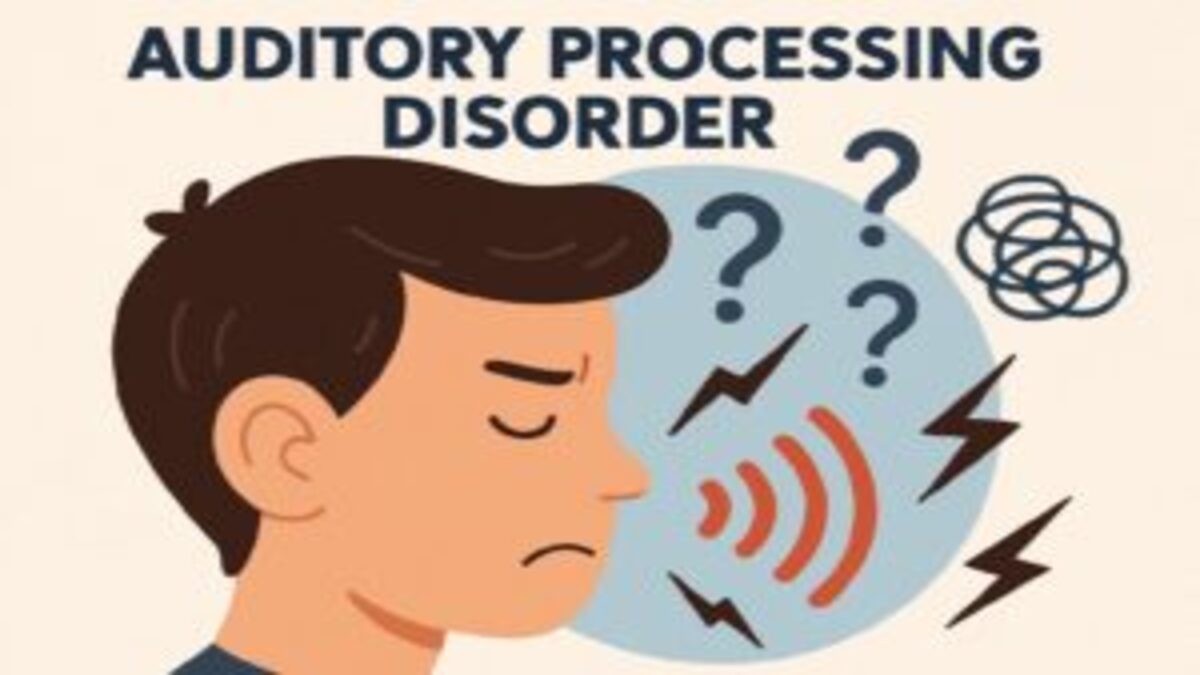
Auditory processing disorder can affect several listening abilities, including understanding speech in background noise, recognizing sound patterns, and processing competing auditory information.
Because these abilities are different, improvement in one area does not automatically mean every listening difficulty has improved.
Regular progress monitoring helps the treatment team determine:
- Whether targeted auditory skills are improving.
- Whether improvements are noticeable outside therapy sessions.
- Whether classroom, workplace, or home accommodations are effective.
- Whether treatment goals need adjustment.
- Whether continued therapy, a different intervention, or ongoing accommodations would be most appropriate.
Progress monitoring also helps avoid continuing interventions that are not producing meaningful benefits.
Step 1: Establish a Baseline Before Treatment
Before evaluating improvement, clinicians need to understand the individual’s starting abilities and everyday communication challenges.
A baseline assessment provides information that can be compared with later results. The assessment is individualized rather than based on one mandatory testing combination.
Review Hearing and Listening Abilities
An audiologist may review hearing history, conduct appropriate hearing tests, and examine auditory processing abilities relevant to the person’s symptoms.
Depending on the individual, auditory processing assessment may include:
- Speech understanding in background noise.
- Recognition of auditory patterns and timing.
- Listening to different sounds presented simultaneously to each ear.
- Recognition of degraded or competing speech signals.
- Other measures selected according to age, language abilities, hearing status, and clinical concerns.
These assessments help identify which abilities should be monitored during treatment.
Document Everyday Listening Problems
Clinical testing should be accompanied by information about how listening difficulties affect everyday activities.
For example, a parent might report that a child frequently misses spoken classroom instructions. An adult might describe difficulty following conversations during meetings or in restaurants.
Useful baseline observations may include:
- How frequently spoken instructions need repeating.
- Which environments cause the greatest listening difficulties.
- Whether written instructions improve understanding.
- How effectively the person participates in group conversations.
- How much listening effort or frustration the individual reports.
These observations establish practical goals that can be reviewed as treatment progresses.
Set Specific Treatment Goals
Goals should describe meaningful improvements rather than simply stating that auditory processing needs to get better.
For example, a treatment goal might involve following classroom directions more consistently, understanding spoken information with competing noise, or using clarification strategies independently.
The treatment team should determine how each goal will be measured and when it will be reviewed.
Step 2: Compare Auditory Processing Test Results
Behavioral auditory processing tests may help clinicians evaluate changes in specific listening abilities.
Follow-up testing should be selected according to the original findings and treatment goals. Not every person needs every available auditory processing test.
Speech-in-Noise Testing
Speech-in-noise testing measures how well someone recognizes spoken words or sentences when competing sounds are present.
When difficulty understanding speech in noise is a treatment target, clinicians may compare appropriate baseline and follow-up results.
A speech-in-noise test can provide useful information about listening performance under controlled conditions.
However, improved scores do not necessarily establish that auditory processing disorder has resolved. Results must be interpreted alongside everyday communication outcomes and other relevant findings.
Dichotic Listening Tests
Dichotic listening tests present different auditory information to the two ears at the same time.
Depending on the test, the listener may be asked to repeat information from both ears or focus on information presented to one ear.
When dichotic listening is an identified area of difficulty, follow-up testing may help determine whether performance has changed.
Temporal Processing Tests
Temporal processing involves recognizing aspects of sound timing, sequence, and patterns.
Clinicians may use appropriate pattern recognition or gap detection tasks to examine these abilities.
Changes in performance can provide information about the specific auditory skill being tested. They should not be interpreted as proof that all listening abilities have improved.
Other Speech Recognition Measures
Some evaluations include tests of speech recognition under particular listening conditions.
For example, a routine word recognition test measures how accurately a person identifies spoken words under specified conditions.
Ordinary word recognition testing is not, by itself, a diagnostic or comprehensive progress measure for auditory processing disorder.
How Do Clinicians Know Whether Test Scores Really Improved?
A higher score at a follow-up appointment does not always represent a meaningful treatment effect.
Clinicians must consider several factors when comparing results:
- Test reliability: Small score differences may fall within normal measurement variability.
- Practice effects: Familiarity with testing procedures can sometimes improve performance.
- Age and development: Children’s abilities may change as they mature.
- Attention and fatigue: Concentration, motivation, and tiredness can affect performance.
- Testing conditions: Comparisons should account for differences in equipment, procedures, and listening conditions.
- Appropriate norms: Results should be interpreted using suitable reference information when available.
Where possible, clinicians consider whether changes exceed expected test-retest variability and whether the improvement is consistent with other findings.
Most importantly, improved test performance should be considered alongside changes in communication and participation outside the clinic.
Step 3: Track Improvements in Everyday Listening
Clinical test results provide valuable information, but everyday communication is equally important when evaluating auditory processing disorder treatment.
A person may improve on a particular listening exercise without experiencing the same improvement in a classroom, workplace, or busy social environment. For this reason, clinicians should examine whether treatment benefits carry over into daily activities.
Signs of Progress at Home
Parents, caregivers, and adults receiving treatment can observe changes in everyday communication.
Possible signs of improvement include:
- Needing fewer repetitions during conversations.
- Following spoken instructions more consistently.
- Understanding conversations more easily when background noise is present.
- Using clarification strategies independently.
- Reporting less listening effort or frustration.
- Participating more comfortably in family or social conversations.
These changes are encouraging, but they do not automatically prove that an underlying auditory processing deficit has improved. Better communication may also result from environmental changes, accommodations, language development, or improved attention.
Measuring Progress at School
Teachers can provide useful information about how a child’s listening abilities affect classroom participation.
Relevant observations may include whether the student:
- Follows spoken directions with fewer requests for clarification.
- Understands instructions during group activities.
- Participates more consistently in classroom discussions.
- Uses written instructions or other accommodations effectively.
- Reports less difficulty hearing the teacher in noisy situations.
Academic performance can also be considered, but changes in grades alone cannot establish whether auditory processing treatment is effective. School performance is influenced by many factors beyond listening ability.
Measuring Progress in Adults
Adults receiving APD-related intervention may have different communication goals than children.
For example, an adult might want to follow workplace meetings, understand conversations in restaurants, or communicate more comfortably during telephone and video calls.
Progress can be evaluated by reviewing specific situations that were difficult before intervention and determining whether communication has become more effective.
Adults may also benefit from tracking listening effort, communication confidence, and the usefulness of environmental accommodations.
Step 4: Use Listening Questionnaires and Progress Records
Structured questionnaires and written progress records can help clinicians and families monitor changes over time.
Some questionnaires ask listeners, parents, or teachers to rate how frequently certain listening difficulties occur. Others focus on communication participation, listening effort, or the effects of hearing-related difficulties on everyday activities.
When an appropriate validated questionnaire is available, using it consistently can provide more useful information than relying only on general impressions.
A Simple Way to Track Everyday Progress
Families and adults can keep a brief listening record between appointments.
For example, they might document:
- Listening situation: Following directions during a classroom activity.
- Original difficulty: Frequently missing instructions when other students are talking.
- Support being used: Written directions and reduced background noise.
- Observed change: Following more instructions without requesting repetition.
- Remaining challenge: Difficulty when several people speak simultaneously.
This type of record helps identify meaningful changes and situations that still require support.
It is not a substitute for standardized assessment, but it can make follow-up appointments more productive.
Are Brainwave Tests Used to Measure APD Treatment Progress?
Electrophysiological tests measure electrical responses associated with auditory stimulation. Some have been studied in relation to auditory processing abilities and changes following intervention.
Examples include auditory brainstem response (ABR), auditory middle latency responses, mismatch negativity (MMN), and cortical auditory evoked potentials such as P300.
However, these tests do not all measure the same processes, and they are not routinely necessary for monitoring every person receiving APD treatment.
What Brainwave Testing Can Show
Depending on the test, electrophysiological measurements may provide information about neural responses to sound at different levels of the auditory system.
Researchers sometimes use these measures to investigate whether auditory responses change after training or other interventions.
Such findings may contribute to understanding auditory function, but an observed change in a brainwave response does not automatically establish meaningful improvement in everyday listening.
Why Brainwave Testing Has Limitations
Electrophysiological results can be influenced by the testing method, age, attention, and other factors.
There is no single brainwave measure that reliably establishes whether APD treatment has succeeded for every patient.
An audiologist may recommend additional physiological testing when clinically appropriate, but behavioral assessments and functional communication outcomes remain important parts of evaluating treatment progress.
How Often Should APD Treatment Progress Be Reviewed?
There is no universally required schedule for repeating auditory processing tests during treatment.
The timing of follow-up appointments depends on the intervention, the person’s age and needs, the treatment goals, and the clinician’s judgment.
Some treatment programs include regular reviews of performance during sessions. More comprehensive reassessment may occur after a defined intervention period or when the treatment team needs additional information.
Repeating a full auditory processing test battery at every appointment is generally unnecessary.
When a Treatment Plan May Need Adjustment
Reassessment may be appropriate when:
- Progress toward agreed-upon goals is limited.
- Listening difficulties continue to interfere with important activities.
- The individual develops new communication concerns.
- Current accommodations are not providing sufficient benefit.
- Changes in hearing, language, attention, or other abilities affect treatment needs.
- The person has achieved the original goals and may be ready for a different level of support.
If progress is limited, the treatment team should consider whether the original goals, intervention methods, diagnosis, or accommodations need to be reconsidered.
Simply continuing the same exercises for additional months does not guarantee better results.
How Do Other Conditions Affect Progress Measurements?
Auditory processing difficulties may occur alongside language disorders, learning disabilities, attention difficulties, or other developmental conditions.
These conditions can influence both listening performance and responses to treatment.
For example, a child’s performance on an auditory task may change because of improvements in attention, language comprehension, familiarity with the task, or auditory processing abilities.
Clinicians should consider these possibilities rather than attributing every improved score to APD treatment.
Why Different Specialists May Measure Different Outcomes
An audiologist may monitor specific auditory processing skills and listening performance.
A speech-language pathologist may assess changes in language comprehension, communication strategies, and functional listening.
Teachers may describe classroom participation and the effectiveness of educational accommodations.
Psychologists or other qualified professionals may evaluate attention, learning, or related concerns when appropriate.
These observations provide complementary information. They should be considered together when determining whether an intervention is helping the individual achieve meaningful goals.
When Is APD Treatment Considered Successful?
Successful treatment does not necessarily mean that every auditory processing test score falls within a typical range or that all listening difficulties disappear.
Instead, success should be evaluated according to the goals established at the beginning of intervention.
Examples of meaningful outcomes include:
- Improved understanding of spoken information in important listening situations.
- Greater independence in using communication strategies.
- More effective participation at school, work, or home.
- Reduced listening difficulty through appropriate accommodations.
- Improvement in targeted auditory skills when supported by reliable assessment findings.
Some people may continue using remote microphone systems, written instructions, or other communication supports after formal training ends.
Ongoing use of accommodations does not mean the intervention was unsuccessful. Effective management of listening challenges is itself an important outcome.
Frequently Asked Questions
How Can Parents Tell Whether APD Treatment Is Working?
Parents can watch for changes in following directions, understanding conversations, using listening strategies, and participating in everyday activities. These observations should be discussed with the treatment team and considered alongside appropriate clinical assessments.
Does a Better Auditory Processing Test Score Mean Treatment Worked?
Not necessarily. Clinicians must consider test reliability, practice effects, normal development, and other factors. Improved scores are most meaningful when supported by evidence of better everyday communication.
Can Auditory Processing Improve Without Formal Training?
Listening performance can change with development, environmental adjustments, language support, and other interventions. Whether formal auditory training is appropriate depends on the individual’s needs and assessment findings.
Are Brainwave Tests Required During APD Treatment?
No. Electrophysiological testing may be useful in selected clinical or research situations, but it is not universally required to measure APD treatment progress.
What Happens If APD Treatment Is Not Helping?
The treatment team should review the original goals, assessment findings, intervention methods, and everyday communication needs. Adjusting accommodations, addressing additional conditions, or changing the treatment approach may be appropriate.
Does Every Child Need Repeat Auditory Processing Testing?
Not necessarily. Follow-up testing should be guided by clinical needs and whether the results would help determine future treatment decisions. Functional listening progress may also be monitored through questionnaires, observations, and goal-based assessments.
The Bottom Line
Progress during auditory processing disorder treatment is best evaluated through a combination of appropriate auditory assessments, clearly defined goals, and changes in everyday communication.
Improved test scores can provide useful information, but meaningful progress also includes understanding conversations more easily, participating more effectively in daily activities, and using helpful communication strategies independently.
Because APD assessment and treatment are individualized, patients and families should work with qualified professionals to determine which outcomes matter most and how those outcomes will be measured.
Professional Resources
- American Speech-Language-Hearing Association: Central Auditory Processing Disorder — Professional guidance on assessment, intervention, and treatment monitoring.
- American Speech-Language-Hearing Association: Understanding Auditory Processing Disorders in Children — Information for families about APD and its management.
Medical Disclaimer
Apex Brain & Hearing Health provides educational information only. Our content is not a substitute for professional medical advice, diagnosis, or treatment.
Always seek the advice of a qualified healthcare professional with questions about a medical condition, symptoms, treatment options, or changes to your health.