 Skip to content
About This Article
Written by: Apex Brain & Hearing Health Editorial Team
Developed using reputable medical literature, clinical guidance, and trusted health organizations whenever appropriate.
Affiliate Disclosure: Apex Brain & Hearing Health may earn a commission if you purchase through links on this page, at no additional cost to you. As an Amazon Associate, we earn from qualifying purchases. Learn more.
What Are the Best Ways to Protect Your Hearing for the Future?
The best ways to protect your hearing for the future are to reduce exposure to loud noise, keep headphone volume at safer levels, wear properly fitted hearing protection, limit time in noisy environments, and have your hearing evaluated when changes occur.
Noise-induced hearing loss is largely preventable. However, hearing changes caused by aging, genetics, infections, or certain medical conditions cannot always be prevented.
Protecting your hearing is not about avoiding every loud sound. It is about understanding how sound intensity, exposure duration, and repeated exposure influence your risk.
The key point: Lower the volume, increase your distance from loud sound sources, shorten exposure time, and wear suitable hearing protection when noise cannot be avoided.
1. Understand How Loud Is Too Loud
Noise-related hearing damage depends on three important factors:
- Sound level: How intense the noise is.
- Exposure duration: How long you are exposed.
- Repeated exposure: How often you encounter hazardous noise.
Decibels are measured on a logarithmic scale, meaning a relatively small increase in decibels represents a substantial increase in sound energy.
The National Institute for Occupational Safety and Health (NIOSH) recommends an occupational exposure limit of 85 A-weighted decibels (dBA) averaged over an eight-hour workday.
For every three-decibel increase, NIOSH recommends cutting exposure duration in half.
Examples of NIOSH Recommended Exposure Durations
- 85 dBA: 8 hours
- 88 dBA: 4 hours
- 91 dBA: 2 hours
- 94 dBA: 1 hour
- 97 dBA: 30 minutes
- 100 dBA: 15 minutes
These figures are occupational exposure recommendations, not guarantees that every exposure below the stated duration is harmless.
Individual susceptibility varies, and very loud impulse sounds, including nearby gunfire or explosions, can cause immediate hearing injury.
Source: NIOSH: Understand Noise Exposure.
2. Keep Headphone and Earbud Volume at Safer Levels
Headphones and earbuds can be used safely when sound levels and listening duration are managed appropriately.
Risk increases when listening levels are high and exposure continues for long periods.
The World Health Organization recommends keeping personal audio volume below approximately 60% of a device’s maximum setting as a practical precaution.
However, a percentage alone does not establish a safe sound level because output varies between devices, headphones, recordings, and settings.
Practical Safe-Listening Habits
- Use the lowest volume that allows comfortable listening.
- Enable built-in headphone volume limits or exposure notifications when available.
- Reduce listening time when sound levels are high.
- Take breaks from prolonged loud listening.
- Use well-fitting headphones that do not require excessive volume.
- Pay attention to your overall sound exposure across the day and week.
WHO guidance provides an example of 80 dB for up to 40 hours per week, compared with approximately four hours per week at 90 dB.
These are risk-based listening recommendations, not universal guarantees against injury.
Source: WHO: Safe Listening.
Does the 60/60 Rule Protect Your Hearing?
The 60/60 rule suggests listening at no more than 60% volume for no longer than 60 consecutive minutes before taking a break.
It can encourage safer habits, but it is not a universal medical safety threshold.
Some devices may produce excessive sound levels below 60% volume, while others may be quieter.
Monitoring actual exposure when possible is more informative than relying solely on the volume percentage.
3. Choose Proper Hearing Protection
Earplugs and protective earmuffs can substantially reduce noise exposure when selected and worn correctly.
The best hearing protector is one that provides suitable attenuation, fits properly, and can be worn consistently during hazardous exposure.
Foam Earplugs
Disposable foam earplugs can provide substantial sound reduction when inserted correctly.
Many people receive less protection than expected because the plugs are not inserted deeply enough or do not create an adequate seal.
Follow the manufacturer’s fitting instructions and check that the plugs feel secure and comfortable.
Reusable and Custom-Molded Earplugs
Reusable earplugs may be convenient for frequent use.
Custom-molded earplugs are made to fit an individual’s ear canals and may offer comfort or convenience advantages for some users.
However, custom earplugs are not automatically more protective than properly fitted foam earplugs.
Actual protection depends on design, fit, condition, and correct use.
Protective Earmuffs
Protective earmuffs cover the outer ears and can be easier for some people to position correctly.
They may be useful for power tools, lawn equipment, and certain occupational environments.
Glasses, hats, hair, and other equipment can interfere with the earmuff seal, so fit should be checked.
Musicians’ Earplugs
Some hearing protectors are designed to reduce sound more evenly across frequencies.
These products, sometimes called flat-attenuation or musicians’ earplugs, may preserve a more balanced listening experience during music activities.
They can be useful for musicians, concertgoers, and others who want hearing protection while maintaining sound quality.
Learn more from the NIDCD’s guide to hearing protectors.
4. Do Not Confuse Noise-Canceling Headphones With Hearing Protection
Active noise-canceling headphones can reduce certain background sounds, particularly relatively steady low-frequency noise.
This may allow users to enjoy music or spoken audio at a lower volume.
However, consumer noise-canceling headphones should not automatically be used as substitutes for certified hearing protectors.
NIOSH advises that headphones or earbuds with active noise cancellation should not be considered occupational hearing protection unless they carry an appropriate noise reduction rating.
For hazardous industrial noise, firearms, or other high-risk situations, select hearing protection designed and rated for those exposures.
5. Increase Your Distance From Loud Sound Sources
Moving farther away from loudspeakers, machinery, engines, or other noise sources can reduce the sound reaching your ears.
For example, choosing a seat away from concert loudspeakers or stepping back from a noisy tool may reduce exposure.
However, the actual reduction depends on the environment, sound source, surrounding surfaces, and distance.
There is no single universally safe distance from fireworks, concerts, or other loud events.
When exposure remains hazardous, distance should be combined with suitable hearing protection or reduced exposure time.
6. Limit Time in Noisy Environments
Exposure duration is a major factor in noise-related hearing damage.
Shortening the amount of time spent around hazardous noise can reduce cumulative exposure.
Useful strategies include:
- Take breaks in quieter locations during noisy events.
- Avoid spending unnecessary time close to loud machinery.
- Reduce recreational noise exposure after a loud workday.
- Choose quieter activities when possible.
- Plan ahead when concerts, motorsports, or other loud events are expected.
There is no universally established 15-minute break schedule or exact 18-hour recovery period that guarantees protection from hearing damage.
Temporary hearing changes after loud exposure should not be interpreted as evidence that the ears have fully recovered without injury.
7. Protect Your Hearing at Work
Construction, manufacturing, agriculture, aviation, military service, and other occupations may involve hazardous noise exposure.
Workplace hearing conservation programs can help reduce avoidable damage.
Effective prevention begins with reducing noise at its source whenever practical.
Reduce Noise Before Relying on Earplugs
Employers should prioritize controls such as quieter equipment, equipment maintenance, barriers, and changes to work processes.
Hearing protection remains important when noise cannot be adequately reduced through other measures.
Choose Protection Appropriate for the Exposure
Workers may need earplugs, earmuffs, or specialized protective equipment based on measured exposure levels.
NIOSH recommends double hearing protection, such as earmuffs over earplugs, for exposures of 100 dBA or greater or for impulse sounds.
Using two devices together does not simply add their listed noise reduction ratings.
Fit testing and workplace exposure measurements help determine whether protection is adequate.
Source: NIOSH: Provide Hearing Protection.
8. Measure Sound Levels When Useful
It can be difficult to judge hazardous noise by listening alone.
Sound-level measurements can help identify situations that require greater precautions.
Smartphone sound-level apps can provide useful estimates, but accuracy varies by device, microphone, app, and calibration.
NIOSH offers a validated Sound Level Meter app for compatible iOS devices.
The app can estimate sound levels and help users understand potential exposure risks.
However, consumer measurements should not replace appropriate professional occupational noise assessment when precise compliance measurements are required.
For details, see NIOSH: Sound Level Meter App.
9. Protect Children’s Hearing
Children may be exposed to loud noise through headphones, toys, school activities, concerts, sporting events, and recreational equipment.
Because children may not recognize hazardous sound levels, adults should help establish safer listening habits.
Practical steps include:
- Choose appropriately sized protective earmuffs for loud events.
- Set reasonable volume limits on personal audio devices.
- Monitor listening duration.
- Keep children away from fireworks launch areas and other intense noise sources.
- Provide hearing protection during loud recreational activities.
- Seek professional evaluation if hearing or speech development concerns arise.
Young children may find protective earmuffs easier to use than earplugs, which require careful insertion.
Hearing protection should fit appropriately and be suitable for the child’s age and activity.
10. Recognize Early Warning Signs of Hearing Damage
Noise-related hearing damage may develop gradually without pain.
Possible warning signs include:
- Ringing or buzzing in the ears after loud exposure
- Muffled hearing after a concert or other noisy event
- Difficulty understanding speech in background noise
- Increasing television or telephone volume
- Frequently asking people to repeat themselves
- Difficulty hearing certain higher-pitched sounds
These symptoms do not establish a particular diagnosis, and tinnitus can occur without measurable hearing loss.
Temporary symptoms following noise exposure can still indicate potentially harmful exposure.
For additional guidance, read our article on early warning signs of cognitive and hearing changes.
11. Get Your Hearing Evaluated When Changes Occur
A professional hearing evaluation can identify hearing changes, establish a baseline, and help determine whether additional medical assessment is needed.
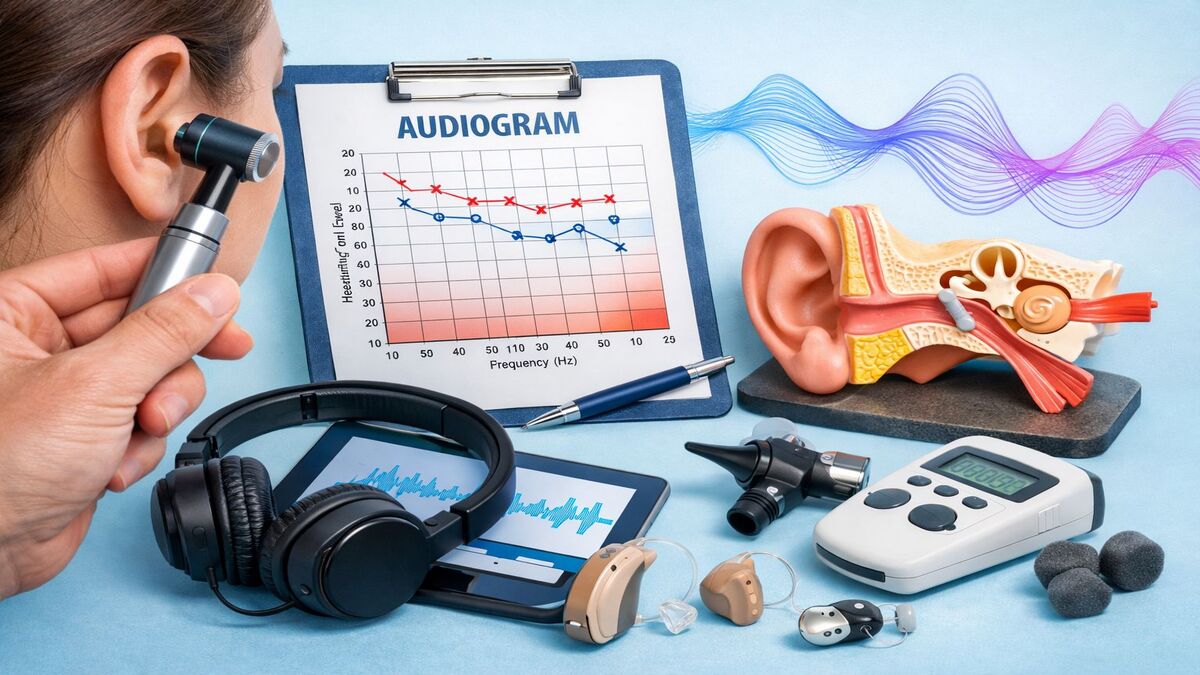
An audiologist may use pure-tone audiometry, speech testing, and other appropriate procedures to assess hearing.
People with significant occupational noise exposure or other risk factors may benefit from periodic monitoring based on their circumstances.
There is no single testing interval that is appropriate for everyone.
Important: Sudden hearing loss in one or both ears requires urgent medical evaluation, preferably the same day. Do not assume sudden hearing loss is caused by earwax or congestion.
Can You Prevent Every Type of Hearing Loss?
No. Hearing protection is highly effective for reducing the risk of noise-induced hearing damage, but it cannot prevent every cause of hearing loss.
Aging, inherited conditions, infections, injuries, and certain medications may affect hearing despite appropriate noise precautions.
Managing chronic medical conditions and discussing medication risks with healthcare professionals are reasonable health measures, but they do not guarantee prevention of age-related or other forms of hearing loss.
Permanent sensorineural hearing loss generally cannot be reversed with current standard medical treatment.
However, hearing aids, cochlear implants for eligible individuals, and other communication supports can help some people manage hearing difficulties.
Frequently Asked Questions
What is the most important way to protect hearing?
Reducing hazardous noise exposure is one of the most effective ways to prevent avoidable hearing damage. Lower the volume, move away from loud sources, shorten exposure time, and use appropriate hearing protection when needed.
What decibel level can damage hearing?
Hearing risk depends on sound intensity and exposure duration. NIOSH recommends limiting occupational exposure to 85 dBA over eight hours, with shorter recommended exposure times at higher levels. Very intense impulse sounds can cause injury almost immediately.
Are foam earplugs good enough?
Properly selected and fitted foam earplugs can provide substantial protection. Their effectiveness depends on correct insertion, an adequate seal, and the amount of noise reduction required for the activity.
Are custom earplugs better than regular earplugs?
Not necessarily. Custom earplugs may offer comfort or convenience benefits, but properly fitted conventional earplugs can provide excellent protection. Device selection should be based on fit and exposure needs.
Do noise-canceling headphones protect hearing?
They can help people listen at lower volumes by reducing background noise. However, consumer active noise cancellation is not automatically certified hearing protection for hazardous environments.
Is the 60/60 rule scientifically guaranteed to be safe?
No. It is a practical listening precaution, not a universal safe-exposure threshold. Actual sound output and cumulative listening time matter more than a volume percentage alone.
Can ears recover after loud music?
Temporary hearing changes may improve after noise exposure, but improvement does not guarantee that no damage occurred. Persistent muffled hearing or tinnitus warrants professional evaluation, and sudden hearing loss requires urgent medical care.
Can hearing loss from loud noise be reversed?
Permanent noise-induced sensorineural hearing loss generally cannot be reversed with current standard treatment. Protecting hearing from further hazardous exposure remains important.
Should I use hearing protection at concerts?
Yes, when sound levels may be hazardous. Properly fitted earplugs, including suitable musicians’ earplugs, can reduce exposure while allowing you to enjoy the event.
How can I tell whether an environment is too loud?
If you must raise your voice to communicate with someone an arm’s length away, the sound may be hazardous. Sound-level measurements can provide additional information, but you should not wait for pain or ringing before taking precautions.
The Bottom Line
Protecting your hearing for the future means making noise reduction part of everyday life.
The most effective habits include listening at safer volumes, limiting prolonged noise exposure, moving away from loud sources, using properly fitted hearing protection, and monitoring hearing changes.
Not all hearing loss can be prevented, but avoiding hazardous noise can reduce one important and largely preventable source of permanent hearing damage.
Start with the situations you encounter most often, whether that means headphones, power tools, concerts, or workplace machinery. Consistent precautions are more useful than waiting until hearing difficulties become noticeable.
Medical Disclaimer
Apex Brain & Hearing Health provides educational information only. Our content is not a substitute for professional medical advice, diagnosis, or treatment.
Always seek the advice of a qualified healthcare professional with questions about a medical condition, symptoms, treatment options, or changes to your health.


