Skip to content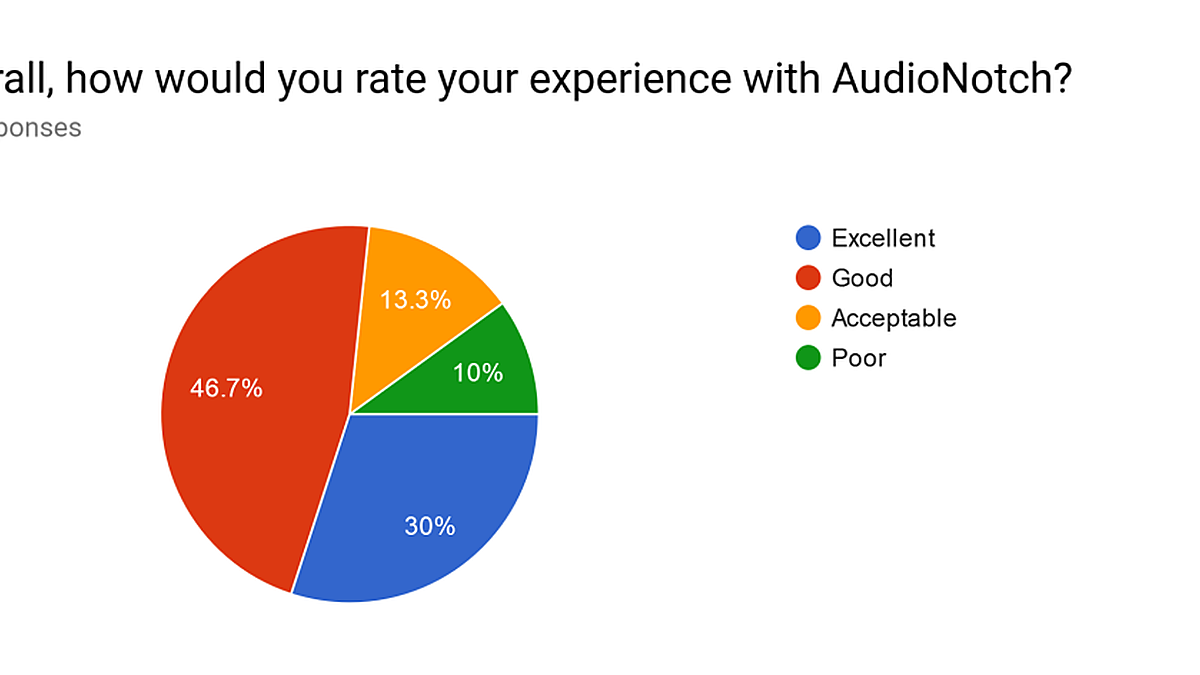
About This Article
Written by: Apex Brain & Hearing Health Editorial Team
Developed using reputable medical literature, clinical guidance, and trusted health organizations whenever appropriate.
Affiliate Disclosure: Apex Brain & Hearing Health may earn a commission if you purchase through links on this page, at no additional cost to you. As an Amazon Associate, we earn from qualifying purchases. Learn more.
Article At a Glance
- AudioNotch is a commercial sound-therapy platform built around tailor-made notched audio.
- Notched sound therapy has been studied for tonal tinnitus, but research results are mixed and the evidence does not establish it as a reliable cure.
- Research on tailor-made notched music or sound should not automatically be treated as clinical proof that the AudioNotch commercial service will reduce tinnitus.
- The approach generally requires identifying a tinnitus pitch and filtering a band of frequencies around that pitch from music, noise, or other sound.
- AudioNotch may be reasonable for someone interested in experimenting with personalized sound therapy, but expectations should remain realistic.
AudioNotch takes an interesting approach to tinnitus sound therapy.
Instead of simply adding another sound to make tinnitus less noticeable, it allows users to create audio with a band of frequencies removed around the pitch they believe most closely matches their tinnitus.
This technique is generally known as tailor-made notched sound therapy or tailor-made notched music therapy.
The concept has been investigated in scientific research, which gives AudioNotch a more plausible foundation than many products promoted as tinnitus cures.
But that does not mean the science is settled.
Notched sound therapy has produced mixed research findings, and AudioNotch itself should not be described as clinically proven to eliminate tinnitus, reverse its neurological cause, or permanently retrain the brain.
This review explains how AudioNotch works, what researchers have actually studied, its practical advantages and limitations, and how it compares with better-established approaches to tinnitus management.
What Is AudioNotch?
AudioNotch is an online platform designed to create personalized notched audio for people with tinnitus.
The basic process involves:
- Estimating the pitch of your tinnitus.
- Selecting or providing an audio source.
- Filtering a band of sound around the selected tinnitus frequency.
- Listening to the resulting notched audio.
Depending on the current features offered by the service, users may have access to different types of audio such as music, broadband noise, or environmental sounds.
Because online services can change features, pricing, subscriptions, and technical requirements, verify the current AudioNotch offering directly before purchasing.
What Is Notched Sound Therapy?
Notched sound therapy is different from ordinary tinnitus masking.
With conventional sound enrichment, a person might listen to:
- White noise
- Pink noise
- Brown noise
- Rain
- Ocean sounds
- A fan
- Music
- Other comfortable environmental sound
The added sound can reduce the contrast between tinnitus and silence, making tinnitus less prominent for some people.
Notched sound takes a different approach.
A band of frequencies surrounding the person’s estimated tinnitus pitch is removed from the audio.
Researchers have investigated whether repeated exposure to this altered sound might influence auditory processing in ways that eventually change tinnitus perception.
Does AudioNotch Target the Neurological Source of Tinnitus?
That description is too strong.
Tinnitus involves complex interactions among the auditory system, attention, emotion, hearing loss, and other neurological processes.
Researchers have proposed mechanisms that could potentially explain effects from notched sound, including changes involving neural activity and lateral inhibition.
But a proposed mechanism should not be confused with proof that AudioNotch corrects the neurological cause of an individual’s tinnitus.
It is more accurate to say that notched sound is an experimental or developing sound-therapy approach based on hypotheses about auditory plasticity.
What Does Neuroplasticity Have to Do With It?
Neuroplasticity refers to the nervous system’s ability to change in response to experience and input.
Neuroplastic changes are relevant to modern theories of tinnitus, particularly when hearing loss changes the pattern of information reaching the brain.
That has led researchers to investigate whether carefully modified sound could influence tinnitus-related auditory activity.
However, phrases such as “rewiring the brain,” “reversing maladaptive neuroplasticity,” or “retraining the auditory cortex” can make the clinical evidence sound more certain than it is.
Even if researchers observe changes associated with treatment, that does not establish that a consumer sound program permanently repairs the neural mechanisms responsible for tinnitus.
How Is AudioNotch Different From Tinnitus Masking?
Masking and sound enrichment generally introduce external sound to reduce tinnitus prominence.
Notched sound deliberately removes a selected frequency region from the sound instead.
That is a meaningful technical difference.
It does not establish that notched sound is superior.
Ordinary sound enrichment can be useful even though it does not attempt to precisely target a tinnitus frequency.
Learn more in our guide to sound therapy for tinnitus.
Does AudioNotch Produce Lasting Improvement?
That has not been established reliably enough to promise.
Some studies of notched sound have reported improvements in tinnitus-related outcomes, while other research has produced less convincing findings.
Research in this area can also involve relatively small samples, different treatment protocols, different outcome measures, and carefully selected participants.
It is therefore inappropriate to conclude that AudioNotch routinely produces cumulative neurological changes that remain after treatment stops.
Some individuals may perceive improvement. Others may notice little or no meaningful change.
Can Notched Sound Eliminate Tinnitus?
It should not be presented as a tinnitus cure.
Individual participants in small studies or individual consumers may report dramatic changes, including periods when tinnitus is no longer noticeable.
That does not establish a predictable cure rate.
Claims that a certain percentage of AudioNotch users completely eliminate tinnitus should be treated cautiously unless they come from appropriately designed independent clinical research.
Research on Tailor-Made Notched Music Therapy
Tailor-made notched music therapy has been investigated by researchers for years.
Some studies have reported reductions in measures such as tinnitus loudness or tinnitus-related activity in selected groups.
These findings are the scientific basis for continued interest in the approach.
But several points are important when interpreting the research.
Small Studies Can Produce Uncertain Results
Early studies can be useful for identifying promising ideas without proving that an intervention works reliably in the wider tinnitus population.
Participants May Be Carefully Selected
Notched sound is easier to study in people with relatively stable tonal tinnitus that can be matched to a frequency.
Those participants do not represent every person with tinnitus.
Different Studies Use Different Protocols
Researchers may differ in:
- The sound being notched
- The width of the notch
- Listening duration
- Treatment duration
- Frequency-matching procedures
- Participant characteristics
- Outcome measures
This makes it difficult to turn research protocols into one universal consumer treatment schedule.
Research on a Technique Is Not Automatically Research on a Product
This is particularly important when evaluating AudioNotch.
A clinical study demonstrating an effect from a specific form of tailor-made notched music does not automatically demonstrate that the commercial AudioNotch platform produces the same result.
The underlying concept and the commercial service should be evaluated separately.
What Does the Overall Evidence Mean for Consumers?
The most defensible conclusion is that notched sound therapy is scientifically interesting but not established strongly enough to be presented as a dependable tinnitus treatment.
That is very different from saying it has been disproven.
Research can continue, and some individuals may decide the approach is worth exploring.
But consumers should not be told that the therapy:
- Reliably lowers tinnitus volume
- Reverses abnormal auditory activity
- Creates permanent neurological improvement
- Works better than conventional sound therapy
- Produces predictable improvement within several weeks
- Cures tinnitus in a known percentage of users
How AudioNotch Frequency Matching Works
AudioNotch is most relevant to tinnitus that has a reasonably identifiable pitch.
The user listens to test tones and attempts to find a frequency that resembles the perceived tinnitus sound.
That selected frequency is then used when creating the notch in the audio.
Is Tinnitus Pitch Matching Easy?
Not always.
Tinnitus is an internal perception rather than an external test tone.
Some people describe a clear whistle or tone that is relatively easy to approximate.
Others hear:
- Hissing
- Static
- Buzzing
- Multiple tones
- Changing pitches
- Broadband sounds
Those forms can be much harder to represent with one frequency.
Does the Match Have to Be Exact?
Consumers should be cautious about claims that being off by a few hundred hertz automatically makes treatment ineffective.
Pitch matching itself can vary, and tinnitus perception may fluctuate.
The research basis for notched therapy makes the selected frequency relevant, but that does not mean a consumer can identify a neurologically exact tinnitus frequency at home.
Should You Keep Changing the Frequency?
There is no evidence-based rule that users should shift their frequency by a particular number of hertz after a certain number of weeks to stimulate different neurons or prevent treatment habituation.
If your tinnitus changes significantly, reassessing what you hear may be reasonable.
That is different from repeatedly adjusting the treatment based on an unsupported optimization formula.
What Types of Tinnitus Are Most Compatible With Notched Sound?
The concept is easiest to apply to tonal tinnitus because the therapy depends on identifying a tinnitus pitch.
A person who hears a relatively stable high-pitched tone may therefore find frequency matching more straightforward than someone whose tinnitus sounds like broad static or constantly changes.
That does not establish that every person with tonal tinnitus will respond.
What About Multi-Tonal Tinnitus?
Multiple tinnitus sounds make personalization more complicated.
A person may have:
- Two or more distinct tones
- A tone plus hissing
- Different tinnitus in each ear
- A sound that changes throughout the day
Commercial software may provide options intended to accommodate complex tinnitus, but evidence should not be assumed simply because the software can generate the audio.
What About Pulsatile Tinnitus?
Pulsatile tinnitus is different from ordinary tonal tinnitus and should not simply be treated as another frequency-matching problem.
Tinnitus that follows the heartbeat deserves appropriate medical evaluation because it can have vascular and other identifiable causes.
A sound program may make pulsatile tinnitus less noticeable, but that does not address its possible cause.
Learn more in our guide to pulsatile tinnitus in one ear.
AudioNotch Music, Noise and Nature Sounds
One attractive feature of a platform such as AudioNotch is the ability to make personalized sound more enjoyable.
Depending on the current service, users may be able to create notched versions of different audio types.
Music may appeal to someone who does not enjoy listening to broadband noise.
Nature sounds may be preferable during relaxation.
Noise may be less distracting during other activities.
These are practical preferences rather than evidence that one sound type produces greater neurological recovery.
Do You Need Expensive Headphones?
Consumers should not assume expensive audiophile headphones are required.
The equipment does need to reproduce the relevant sound comfortably and at an appropriate level.
Fit, comfort, and safe listening habits matter more than buying premium equipment simply because tinnitus therapy is involved.
Can You Use Speakers Instead?
Depending on the platform and intended protocol, speakers may be technically capable of playing the processed audio.
However, headphones and speakers create different listening conditions.
It should not be claimed that headphones automatically increase the therapeutic neurological effect unless evidence demonstrates that difference.
What Volume Should You Use?
Apex does not recommend a fixed tinnitus-treatment volume.
Sound should remain comfortable.
Turning the therapy up louder does not mean it will work faster or produce stronger neuroplastic changes.
Excessive sound exposure can damage hearing and potentially worsen tinnitus.
This is especially important for people whose tinnitus began after noise exposure.
How Many Hours a Day Should You Use AudioNotch?
There is no universal evidence-based listening schedule that Apex can prescribe for AudioNotch.
Research protocols have used specific schedules, and a commercial service may provide its own instructions.
That does not mean everyone with tinnitus should listen for one or two hours each day.
If you use AudioNotch, review its current instructions while keeping sound exposure comfortable and reasonable.
People with hearing disorders, significant sound sensitivity, or concerns about headphone use may benefit from discussing sound therapy with an audiologist.
How Long Does AudioNotch Take to Work?
There is no reliable timetable.
Claims that users should notice initial improvement within two to four weeks, larger improvements after two or three months, and near-elimination after six to twelve months create more certainty than the evidence supports.
Tinnitus naturally fluctuates, sometimes substantially.
A person evaluating a treatment should remember that changes can also coincide with:
- Stress
- Sleep
- Sound exposure
- Illness
- Medication changes
- Attention
- Mood
- Other treatments
That makes uncontrolled before-and-after impressions difficult to interpret.
What About AudioNotch’s User Success Rates?
Company surveys and user testimonials can provide information about customer experiences.
They are not equivalent to independent randomized clinical trials.
Self-reported commercial survey results can be affected by:
- Who chooses to respond
- Who continues using the product
- Expectation effects
- Natural tinnitus fluctuations
- Other treatments being used simultaneously
- Lack of a comparison group
For those reasons, Apex would not use company survey percentages to tell readers their probability of tinnitus improvement or cure.
What About AudioNotch Testimonials?
Tinnitus forums contain both positive and negative experiences with notched sound therapy.
Those experiences can help consumers understand practical issues, but they cannot establish effectiveness.
A testimonial reporting a 50%, 70%, or even 100% improvement does not tell us what would have happened without treatment.
Likewise, one person’s failure to improve does not prove the therapy can never help anyone.
Clinical evidence should carry more weight than dramatic individual stories.
Can AudioNotch Make Tinnitus Worse?
Tinnitus can fluctuate during any treatment period, making cause and effect difficult to determine.
If tinnitus consistently becomes substantially worse during sound therapy, stop escalating the exposure and reassess what you are doing.
Discomfort, pain, new hearing changes, or strong sound sensitivity are reasons to avoid simply pushing through louder or longer sessions in hopes that the treatment will eventually work.
AudioNotch and Sound Sensitivity
People with hyperacusis or significant sound sensitivity may have difficulty tolerating headphone-based sound programs.
A self-directed sound program should not become an exercise in forcing yourself to endure uncomfortable sound.
Professional guidance can be particularly useful when tinnitus occurs alongside substantial sound intolerance.
AudioNotch vs. Ordinary Sound Enrichment
AudioNotch provides a more specialized approach.
Ordinary sound enrichment is simpler.
You can test sound enrichment using equipment you may already own:
- A fan
- A smartphone
- A speaker
- A bedside sound machine
- Quiet music
- Environmental sounds
If those sounds make tinnitus substantially less intrusive, you may not need a frequency-specific commercial program to obtain useful relief.
Notched sound becomes more interesting when someone specifically wants to explore the experimental frequency-personalized approach.
AudioNotch vs. Hearing Aids
Hearing aids and AudioNotch serve different purposes.
When hearing loss is present, hearing aids can improve access to speech and environmental sound.
For some people, increasing access to external sound also makes tinnitus less prominent while hearing aids are being worn.
Hearing aids address an important underlying functional problem when clinically meaningful hearing loss exists.
AudioNotch should not replace appropriate hearing evaluation or amplification.
Learn more in our complete guide to hearing aids.
AudioNotch vs. Cognitive Behavioral Therapy
These approaches also target different aspects of the tinnitus experience.
AudioNotch attempts to influence tinnitus perception through modified sound.
Cognitive behavioral therapy focuses primarily on reducing tinnitus-related distress and changing patterns of attention, fear, and reaction.
CBT does not claim to eliminate the tinnitus sound.
Its evidence for improving tinnitus-related quality of life is stronger than the evidence supporting many commercial sound-treatment claims.
AudioNotch vs. Progressive Tinnitus Management
Progressive Tinnitus Management is a structured tinnitus-management approach that can incorporate education, sound strategies, and coping techniques.
It should not be confused with frequency-specific notched sound therapy.
Someone interested in a broader approach can learn more in our guide to Progressive Tinnitus Management.
Should You Combine AudioNotch With Other Tinnitus Strategies?
Using one sound strategy does not prevent someone from addressing other relevant parts of tinnitus care.
Depending on individual needs, broader management can include:
- Hearing evaluation
- Hearing aids when appropriate
- Sound enrichment
- Cognitive behavioral therapy
- Sleep management
- Stress management
- Protection from hazardous sound exposure
- Evaluation of identifiable medical contributors
However, combining multiple approaches does not prove that they have a special synergistic effect.
Does Reducing Caffeine or Alcohol Make AudioNotch Work Better?
There is no universal tinnitus rule requiring people to eliminate caffeine or alcohol in order for sound therapy to work.
Some individuals identify personal triggers or notice that certain habits affect sleep, anxiety, or tinnitus perception.
Individual observation is more useful than assuming every person with tinnitus needs the same restrictive lifestyle.
AudioNotch Pricing and Subscription Plans
Commercial pricing can change.
For that reason, Apex does not recommend relying on old subscription prices when deciding whether AudioNotch is worthwhile.
Before purchasing, verify:
- Current subscription cost
- Subscription duration
- Renewal terms
- Cancellation requirements
- Refund policy
- Included sound options
- Download or access limitations
- Device compatibility
Evaluate the current terms rather than assuming pricing or guarantees quoted in older reviews remain valid.
Is AudioNotch Cheaper Than Professional Tinnitus Care?
A direct cost comparison can be misleading because different services accomplish different things.
An audiologist may evaluate hearing, identify hearing loss, discuss hearing protection, assess tinnitus characteristics, and determine whether additional medical evaluation is appropriate.
CBT addresses tinnitus-related distress.
Hearing aids address hearing loss.
AudioNotch provides personalized processed sound.
These should not be treated as interchangeable products competing solely on price.
Advantages of AudioNotch
AudioNotch does have practical features that may appeal to some users.
- It provides an accessible way to experiment with notched sound.
- It does not require an invasive procedure.
- It personalizes audio around an estimated tinnitus pitch.
- It may provide different sound choices.
- It can be used at home.
- The underlying concept has been investigated scientifically.
Limitations of AudioNotch
- The evidence for notched sound therapy remains mixed.
- Research on notched sound does not automatically validate AudioNotch itself.
- Frequency matching can be difficult.
- Not every tinnitus sound has a clear pitch.
- There is no reliable way to predict who will benefit.
- There is no established cure rate.
- There is no dependable timeline for improvement.
- It does not replace hearing or medical evaluation when those are appropriate.
Who Might Reasonably Consider AudioNotch?
AudioNotch may be of interest if:
- Your tinnitus has a relatively stable tonal quality.
- You can reasonably approximate its pitch.
- You understand that the evidence is uncertain.
- You are interested in experimenting with personalized sound.
- The current cost is acceptable to you.
- You are comfortable using sound at safe listening levels.
The decision becomes less attractive if you are purchasing it because you were promised a high probability of permanent tinnitus reduction.
Who Should Consider Evaluation Before Self-Directed Sound Therapy?
Sound therapy is not a substitute for evaluating tinnitus with potentially important accompanying symptoms.
Sudden Hearing Loss
Sudden unexplained hearing loss deserves prompt medical evaluation.
It can occur with sudden tinnitus, ear fullness, muffled hearing, or dizziness.
Learn more about hearing symptoms that may require prompt medical attention.
Pulsatile Tinnitus
Tinnitus that follows the heartbeat deserves appropriate medical evaluation.
Frequency matching should not be used as a substitute for investigating possible causes.
Persistent One-Sided Tinnitus
Persistent tinnitus limited to one ear, particularly when accompanied by asymmetric hearing loss or other concerning symptoms, deserves appropriate evaluation.
Sudden Neurological Symptoms
Seek urgent medical attention when tinnitus occurs with sudden significant neurological symptoms such as:
- Facial weakness
- New weakness or numbness
- Difficulty speaking
- Major coordination problems
- Other sudden neurological changes
After Serious Head or Neck Trauma
New tinnitus following significant head or neck trauma should be evaluated according to the severity of the injury and accompanying symptoms.
Frequently Asked Questions
Does AudioNotch work for tinnitus?
AudioNotch is based on tailor-made notched sound therapy, which has been investigated in scientific studies. Results across the research are mixed, however, and there is not strong enough evidence to say AudioNotch reliably reduces tinnitus for most users.
Is AudioNotch clinically proven?
It is more accurate to say that the underlying concept of tailor-made notched sound has been studied clinically. Research on a sound-therapy technique should not automatically be described as clinical proof of a particular commercial platform.
Can AudioNotch cure tinnitus?
AudioNotch should not be considered a proven tinnitus cure.
Can AudioNotch permanently reduce tinnitus?
Some research and individual reports describe improvements that persist beyond individual listening sessions, but permanent tinnitus reduction has not been established as a predictable AudioNotch outcome.
How long does AudioNotch take to work?
There is no reliable timetable. Claims that improvement should occur after a particular number of weeks or months are more precise than the evidence allows.
How many hours per day should I listen?
Research protocols and commercial instructions vary. Apex does not prescribe a universal one- or two-hour daily AudioNotch treatment schedule.
Do I need to match my tinnitus frequency exactly?
The selected pitch is important to the notched-sound concept, but tinnitus pitch matching is inherently approximate and can vary. Consumers should not assume that they can identify a neurologically exact frequency at home.
What if I hear more than one tinnitus tone?
Multi-tonal or fluctuating tinnitus makes frequency-specific treatment more complicated. A commercial platform may offer ways to create multiple profiles, but that does not guarantee effectiveness.
Does AudioNotch work for hissing tinnitus?
Notched sound is conceptually easier to personalize when tinnitus has a distinct pitch. Broadband hissing or static may be harder to represent with one frequency.
Does AudioNotch work for pulsatile tinnitus?
Pulsatile tinnitus should not primarily be approached as a frequency-matching problem. Tinnitus that follows the heartbeat deserves appropriate medical evaluation.
Do I need special headphones?
Expensive headphones should not be assumed necessary. Comfortable equipment capable of reproducing the audio appropriately is more important than purchasing premium hardware simply for tinnitus treatment.
Can I listen while working?
That depends on the audio, the task, comfort, and the current instructions for the service. Sound should not interfere with activities requiring awareness or concentration.
Can I use AudioNotch while sleeping?
There is no general reason to assume overnight listening is necessary. Prolonged headphone use during sleep may also be uncomfortable for some people.
Is AudioNotch better than white noise?
There is not enough evidence to say personalized notched sound is universally superior to ordinary sound enrichment. They use different strategies and people respond differently.
Is AudioNotch better than hearing aids?
They are not interchangeable. Hearing aids primarily treat hearing loss, while AudioNotch provides modified sound. When hearing loss is present, appropriate amplification can address an important functional problem that AudioNotch does not.
Is AudioNotch worth the money?
That depends on its current price, your tinnitus characteristics, your interest in experimenting with notched sound, and your expectations. It may be reasonable for someone who understands the uncertain evidence. It is much harder to justify if purchased with the expectation of a predictable cure or permanent reduction.
The Bottom Line
AudioNotch is more scientifically interesting than many products marketed to people with tinnitus.
Its core idea — tailor-made notched sound — has been investigated by researchers and is based on legitimate questions about auditory processing and neuroplasticity.
But legitimate science does not automatically make a commercial product clinically proven.
The current evidence does not justify telling consumers that AudioNotch targets tinnitus at its neurological source, permanently retrains the brain, reliably reduces tinnitus volume, or cures tinnitus in a predictable percentage of users.
For someone with stable tonal tinnitus who understands those limitations, AudioNotch may still be a reasonable way to explore personalized notched sound.
For someone primarily seeking relief from tinnitus distress, other strategies — including hearing evaluation, hearing aids when hearing loss is present, ordinary sound enrichment, cognitive behavioral therapy, sleep care, and protection from hazardous sound — may also deserve consideration.
The best reason to try AudioNotch is curiosity about a developing sound-therapy approach combined with realistic expectations.
The wrong reason is believing that frequency matching has identified the exact neurological source of your tinnitus and that repeated listening is proven to reverse it.
Medical Disclaimer
Apex Brain & Hearing Health provides educational information only. Our content is not a substitute for professional medical advice, diagnosis, or treatment.
Always seek the advice of a qualified healthcare professional with questions about a medical condition, symptoms, treatment options, or changes to your health.