Skip to content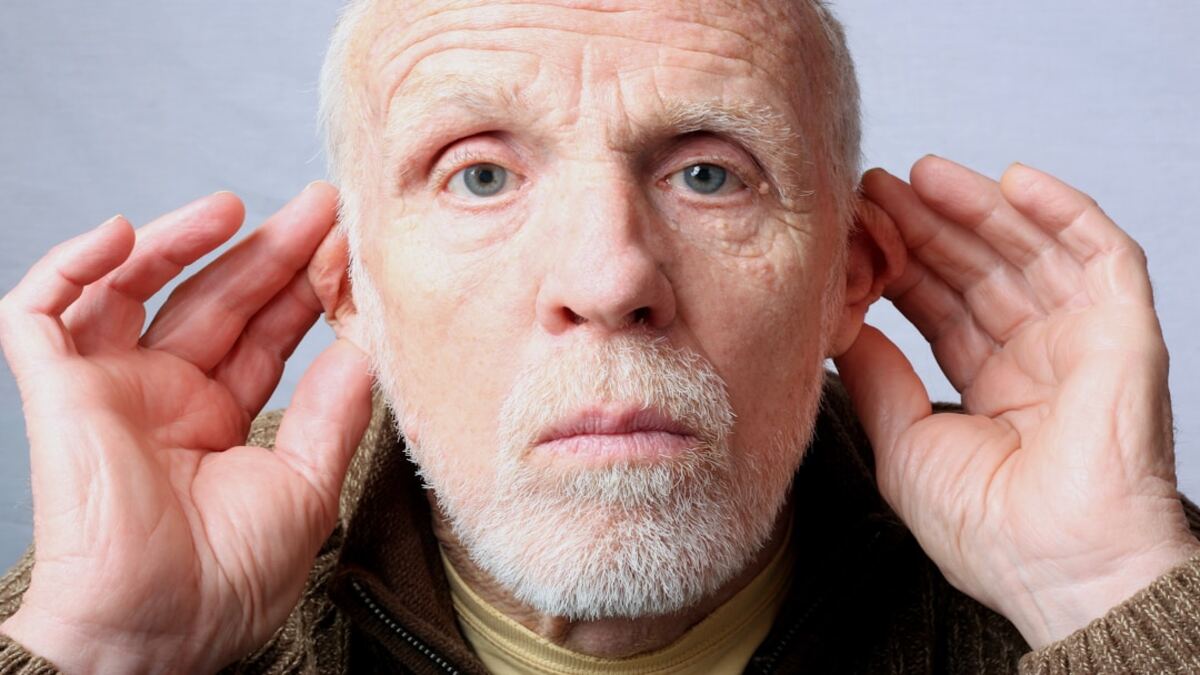
About This Article
Written by: Apex Brain & Hearing Health Editorial Team
Developed using reputable medical literature, clinical guidance, and trusted health organizations whenever appropriate.
Affiliate Disclosure: Apex Brain & Hearing Health may earn a commission if you purchase through links on this page, at no additional cost to you. As an Amazon Associate, we earn from qualifying purchases. Learn more.
Article At a Glance
- Hearing loss often develops gradually, which can make it difficult to recognize at first.
- Common clues include difficulty understanding speech, frequent requests for repetition, trouble hearing in background noise, and increasing television volume.
- Tinnitus can occur with hearing loss, but tinnitus does not automatically mean hearing loss is present.
- Hearing loss can be sensorineural, conductive, or mixed. The cause and type help determine appropriate treatment or management.
- A hearing evaluation can determine whether measurable hearing loss is contributing to communication problems. Sudden unexplained hearing loss deserves prompt medical evaluation.
Hearing loss is not always obvious.
Many common forms develop gradually, allowing people to adapt to small changes without realizing how much their hearing has changed.
You may begin relying more heavily on facial expressions, context, captions, or familiar voices. You may increase the television volume or avoid especially difficult listening environments without consciously connecting those changes to hearing.
That is why recognizing patterns in everyday communication can be useful.
No single symptom proves that you have hearing loss, but persistent changes are a reasonable reason to have your hearing evaluated.
What Are the Common Signs of Hearing Loss?
Hearing loss affects people differently depending on its type, degree, configuration, and cause.
Common signs can include:
- Hearing people speak but missing parts of the words
- Frequently asking people to repeat themselves
- Difficulty understanding conversation in background noise
- Needing the television or radio louder than before
- Difficulty following telephone conversations
- Certain sounds seeming quieter or less distinct
- Speech sounding muffled or unclear
- Depending more heavily on captions or visual cues
- Family members or friends noticing a change in your hearing
- Tinnitus occurring along with other hearing symptoms
These symptoms can also have explanations other than permanent hearing loss.
Testing is the appropriate way to determine whether measurable hearing changes are present.
Why Hearing Loss Can Be Easy to Miss
Gradual hearing loss can be difficult to recognize because there may be no obvious point when hearing suddenly seems different.
Instead, people may adapt.
For example, you might:
- Move closer to speakers
- Watch people’s faces more carefully
- Use context to fill in missed words
- Turn up the television
- Use captions more frequently
- Choose quieter restaurants
- Avoid difficult group conversations
These adaptations can make communication easier while also making the underlying hearing change less obvious.
The brain plays an important role in interpreting incomplete or unclear speech, but it is too simplistic to say that the brain automatically “fills in” every missing sound or begins forgetting frequencies when hearing loss is untreated.
Hearing and speech understanding involve the ears, auditory pathways, attention, language, memory, and other cognitive processes working together.
Hearing People but Not Understanding the Words
One of the most common hearing complaints is:
“I can hear people talking, but I can’t understand what they’re saying.”
This can happen because hearing speech and understanding speech are related but different tasks.
Many common sensorineural hearing-loss patterns affect higher frequencies substantially.
Some consonants contain important higher-frequency acoustic information that contributes to speech clarity.
Depending on the hearing-loss pattern, sounds such as:
- S
- F
- TH
- SH
- T
- K
may become more difficult to distinguish.
The overall voice may remain audible while individual words become less clear.
High-frequency hearing loss is not the only possible cause of this complaint.
Background noise, auditory processing, attention, language, room acoustics, and other factors can also affect speech understanding.
Learn more about hearing sounds but not understanding words.
Difficulty Hearing in Background Noise
Restaurants, family gatherings, meetings, parties, and other busy environments are especially demanding listening situations.
Competing voices and environmental sounds reduce the difference between the speech you want to hear and the surrounding noise.
This is called the signal-to-noise ratio.
People with hearing loss may require a more favorable signal-to-noise ratio than people without hearing loss to understand the same conversation.
However, difficulty hearing in noise does not automatically mean hearing loss is present.
Room acoustics, distance, attention, auditory processing, fatigue, language, and other factors can also contribute.
Persistent difficulty is worth mentioning during a hearing evaluation.
Learn more about difficulty hearing conversations in noisy places.
Turning Up the Television
Needing more television volume can be another clue.
It becomes more informative when:
- Your preferred volume has increased over time
- Other people consistently find your preferred volume too loud
- You can hear the television but miss dialogue
- You rely more heavily on captions
- You also experience difficulty understanding everyday conversation
Television difficulty can also result from poor speakers, background music, program audio mixing, room acoustics, and competing household noise.
TV volume alone cannot diagnose hearing loss.
Learn more about turning up the television and hearing loss.
Why Everyone May Seem to Mumble
If one person seems to mumble, that person may simply speak quietly or unclearly.
If many different people increasingly seem to mumble, hearing difficulty becomes more worth considering.
Speech can remain loud enough to hear while portions of the acoustic information needed for clarity become harder to detect.
Background noise, distance, room acoustics, rapid speech, accents, and speaker articulation also influence understanding.
A persistent pattern across different speakers and environments is more informative than difficulty understanding one particular person.
Learn more about why everyone may seem to mumble.
Tinnitus and Hearing Loss
Tinnitus is the perception of sound without a corresponding external sound source.
It may be described as:
- Ringing
- Buzzing
- Hissing
- Humming
- Whistling
- Clicking
- Roaring
Tinnitus commonly occurs in people who also have hearing loss.
However, tinnitus does not automatically mean hearing loss is present, and hearing loss does not always cause tinnitus.
Tinnitus can also occur with noise exposure, ear disorders, medications, head or neck influences, and other conditions.
A hearing evaluation can determine whether measurable hearing loss accompanies the tinnitus.
Learn more in our complete guide to tinnitus.
The Three Major Types of Hearing Loss
Hearing loss is commonly classified as sensorineural, conductive, or mixed.
| Type | Where the Problem Occurs | Possible Contributors |
|---|---|---|
| Sensorineural | Inner ear, auditory nerve, or related auditory structures | Age-related changes, hazardous noise exposure, genetics, medications, infections, trauma, and other conditions |
| Conductive | Outer or middle ear | Impacted earwax, middle-ear fluid, some infections, eardrum disorders, otosclerosis, and other conditions |
| Mixed | Combination of conductive and sensorineural components | Any combination of conditions affecting both areas |
The type of hearing loss is important because causes and treatment options differ.
Sensorineural Hearing Loss
Sensorineural hearing loss involves the inner ear, auditory nerve, or related auditory structures.
It is the most common broad category of permanent hearing loss in adults.
Possible contributors include:
- Age-related auditory changes
- Hazardous noise exposure
- Genetic factors
- Certain medications and medical treatments
- Infections
- Head or ear trauma
- Other inner-ear or neurological conditions
Damage to cochlear sensory cells can contribute to sensorineural hearing loss.
In humans, damaged cochlear hair cells generally do not regenerate sufficiently to restore normal hearing.
However, sensorineural hearing loss should not be described only as hair-cell damage because several auditory structures and mechanisms can be involved.
Conductive Hearing Loss
Conductive hearing loss occurs when sound transmission through the outer or middle ear is reduced.
Possible causes include:
- Impacted earwax
- Middle-ear fluid
- Some ear infections
- Eardrum abnormalities
- Otosclerosis
- Other structural or middle-ear conditions
Some conductive hearing losses improve when the underlying condition is treated.
Others can be persistent.
Conductive hearing loss should therefore not be described as universally reversible.
Mixed Hearing Loss
Mixed hearing loss includes both sensorineural and conductive components.
For example, someone with permanent sensorineural hearing loss could also develop a middle-ear problem that temporarily or persistently adds a conductive component.
Management depends on the specific causes involved.
Age-Related Hearing Loss
Age-related hearing loss is commonly called presbycusis.
Hearing loss becomes more prevalent with advancing age, but there is no single age when presbycusis begins for everyone.
Age-related hearing changes reflect multiple influences over a lifetime.
These can include:
- Changes within the auditory system
- Genetic susceptibility
- Cumulative noise exposure
- Medical conditions
- Medications
- Other health and environmental factors
Many age-related hearing-loss patterns affect higher frequencies substantially, but individual patterns vary.
Hearing loss should not simply be dismissed as an unavoidable problem that everyone must accept with age.
Evaluation can identify the type and degree of hearing difficulty and whether treatment or communication support may help.
Noise-Induced Hearing Loss
Repeated or sufficiently intense sound exposure can contribute to permanent sensorineural hearing loss.
Possible sources include:
- Power tools
- Industrial equipment
- Firearms
- Concerts and amplified music
- Motorsports
- Personal listening devices used at hazardous levels
- Other occupational or recreational noise
Noise-related risk depends on both sound level and exposure duration.
A value such as 85 dBA should not be interpreted as a universal boundary where every sound below it is safe and every sound above it immediately causes permanent hearing loss.
As sound levels increase, safe or lower-risk exposure time generally becomes shorter.
A single extremely intense sound can also cause immediate auditory injury.
Properly selected and fitted hearing protection can reduce exposure when hazardous noise cannot be avoided.
Hearing Loss and Listening Fatigue
When speech is difficult to understand, listeners may devote more attention to following conversation.
They may rely more heavily on:
- Context
- Visual information
- Prediction
- Attention
- Working memory
Some people report feeling mentally tired after prolonged difficult listening.
This is often called listening fatigue.
Listening fatigue is not unique to hearing loss.
Stress, poor sleep, illness, medications, workload, and other factors can also contribute.
Learn more about listening fatigue and hearing loss.
Hearing Loss, Social Participation, and Mental Well-Being
Communication difficulty can affect daily life.
Some people with hearing loss report frustration in conversations, reduced participation in challenging listening environments, or difficulty communicating at work or home.
Research has also found associations between hearing loss and outcomes such as loneliness, depression, and reduced social participation.
These associations should not be interpreted to mean that hearing loss inevitably causes mental-health or relationship problems.
Many factors influence emotional well-being, employment, relationships, and social participation.
Addressing hearing and communication difficulties can nevertheless help make everyday interaction easier.
Hearing Loss and Cognitive Health
Research has found an association between hearing loss and cognitive decline or dementia.
This relationship is important, but it does not mean that hearing loss inevitably causes dementia.
Researchers continue to investigate possible mechanisms and shared contributing factors.
Potential explanations under study include:
- Changes in auditory input
- Communication difficulty
- Social participation
- Cognitive demands associated with difficult listening
- Shared health and biological factors
Hearing treatment should not be promised to prevent dementia.
Hearing care is better understood as one part of supporting communication, participation, quality of life, and healthy aging.
Learn more in our Brain and Hearing Health guide.
When Hearing Symptoms Need Prompt Medical Evaluation
Most gradual hearing changes do not require emergency treatment.
A sudden unexplained hearing change is different.
Sudden sensorineural hearing loss can develop rapidly and may initially feel like:
- A blocked or clogged ear
- Suddenly muffled hearing
- A noticeable difference between the ears
- New tinnitus
- Ear fullness
- Sometimes dizziness or vertigo
Seek prompt medical evaluation for a sudden unexplained decrease in hearing.
Treatment for sudden sensorineural hearing loss can be time-sensitive, so evaluation should not be delayed simply because the ear feels blocked or because you suspect earwax.
Seek emergency medical care when sudden hearing or communication changes occur with:
- Facial weakness
- Weakness or numbness affecting an arm or leg
- Difficulty speaking or understanding language
- New severe vision changes
- Severe difficulty walking
- A sudden severe headache
- Loss of consciousness
- Other new neurological symptoms
Other ear symptoms may also require medical evaluation depending on their severity and context, including significant ear pain, drainage, persistent unilateral symptoms, or substantial dizziness.
Read more about hearing-loss symptoms that may require prompt medical attention.
What Should You Do if You Think You Have Hearing Loss?
If you are consistently noticing hearing or communication changes, obtaining objective information is a useful next step.
1. Pay Attention to the Pattern
Consider when hearing difficulty occurs.
For example:
- Is it mainly in background noise?
- Does one ear seem different?
- Are certain voices more difficult?
- Has television volume increased?
- Is the problem gradual or sudden?
These details can help a hearing professional understand the complaint.
2. Consider a Hearing Evaluation
An audiologist can evaluate hearing sensitivity and speech understanding and determine whether additional testing may be useful.
Depending on the circumstances, medical evaluation may also be appropriate.
3. Understand the Results
Ask what the testing shows about:
- The type of hearing loss
- The degree of hearing loss
- Which frequencies are affected
- Speech-recognition ability
- Whether the ears differ meaningfully
- Whether additional medical evaluation is recommended
4. Discuss Appropriate Options
Management depends on the cause and severity.
Options may include:
- Medical treatment
- Monitoring
- Hearing aids
- Assistive listening technology
- Communication strategies
- Auditory rehabilitation
- Surgery for selected conditions
- Cochlear implants or other implantable technology for appropriately selected patients
Not everyone with hearing difficulty needs the same treatment.
What Happens During a Hearing Evaluation?
A hearing evaluation may include:
- A review of hearing and medical history
- Examination of the ear canals and eardrums
- Pure-tone audiometry
- Speech testing
- Middle-ear testing when appropriate
- Speech-in-noise testing when useful
- Additional testing based on symptoms and findings
During pure-tone audiometry, test signals at selected frequencies and levels are presented through headphones, insert earphones, or other equipment.
The softest levels you can reliably detect are recorded on an audiogram.
Speech testing provides additional information about your ability to recognize spoken words under controlled conditions.
Tympanometry may be used to evaluate middle-ear function.
The exact tests and length of the appointment vary according to the person and clinical setting.
Are Online Hearing Tests Useful?
Online hearing tests can provide useful screening information.
However, results can be affected by:
- Headphone or speaker calibration
- Device volume settings
- Background noise
- The listening environment
- The design of the test
Online screening cannot examine the ear canal, evaluate every form of hearing loss, or replace the full range of testing available during an in-person evaluation.
Use online testing as a screening tool rather than a definitive diagnosis.
Can Hearing Loss Be Treated?
Many forms of hearing difficulty can be treated, managed, or accommodated.
The appropriate approach depends on the cause.
Some conductive hearing losses improve when the underlying condition is treated.
Many sensorineural hearing losses are permanent but can often be managed with hearing technology and communication strategies.
For appropriately selected people with more severe hearing loss, cochlear implants or other implantable technologies may be considered.
Treatment should be based on the person’s hearing profile, medical findings, communication needs, and preferences.
Can Hearing Aids Help?
Hearing aids can improve access to speech and environmental sounds for many people with appropriate hearing loss.
Modern hearing aids may include features such as:
- Frequency-specific amplification
- Directional microphones
- Noise-reduction processing
- Multiple listening programs
- Wireless connectivity
- Compatibility with remote microphones and other assistive technology
Not every hearing aid includes every feature.
Hearing aids also do not restore normal cochlear function or guarantee effortless understanding in every listening environment.
Benefit depends on:
- The type and degree of hearing loss
- Speech-recognition ability
- Device selection and fitting
- The listening environment
- Communication needs
- Experience with amplification
Learn more in our complete guide to hearing aids.
Frequently Asked Questions
Can Hearing Loss Happen at Any Age?
Yes.
Hearing loss can occur in infants, children, teenagers, adults, and older adults.
Possible causes include genetics, infections, hazardous noise exposure, medications, trauma, congenital conditions, age-related changes, and other medical disorders.
Age-related hearing loss becomes more common later in life, but there is no single age at which it begins for everyone.
What Is the First Sign of Hearing Loss?
There is no single first symptom for everyone.
Common early complaints include:
- Difficulty understanding speech in background noise
- Frequently asking for repetition
- Speech sounding muffled
- Missing portions of conversation
- Increasing television volume
- Difficulty hearing certain sounds
The pattern depends on the type and configuration of hearing loss.
Is Tinnitus Always a Sign of Hearing Loss?
No.
Tinnitus frequently occurs with hearing loss, but it can also occur without measurable hearing loss on a conventional audiogram.
It may be associated with noise exposure, ear disorders, medications, head or neck influences, and other conditions.
A hearing evaluation can determine whether measurable hearing loss is present.
Can Loud Noise Cause Permanent Hearing Loss?
Yes.
Repeated or sufficiently intense sound exposure can permanently damage auditory structures.
Risk depends on both sound level and exposure duration.
A single extremely intense event can also cause immediate injury.
Reducing hazardous exposure and using appropriate hearing protection can help prevent additional avoidable noise-related damage.
How Does a Hearing Test Work?
A comprehensive hearing evaluation commonly includes pure-tone testing and speech testing.
Additional testing may include tympanometry, speech-in-noise assessment, or other procedures depending on the symptoms.
The results help characterize hearing sensitivity, speech recognition, and other aspects of auditory function.
Can Hearing Loss Be Reversed?
It depends on the cause.
Some conductive hearing losses can improve or resolve when an underlying condition such as impacted earwax or middle-ear fluid is successfully treated.
Other conductive conditions can persist.
Most established sensorineural hearing loss is permanent with current routine treatment, but hearing aids and other technologies can improve communication for many people.
Do I Automatically Need Hearing Aids if a Test Shows Hearing Loss?
No.
Management depends on the type and degree of hearing loss, communication difficulties, medical findings, and personal needs.
Some conditions require medical treatment.
Some people benefit from hearing aids.
Others may initially use communication strategies, assistive technology, monitoring, or other approaches.
When Should I See a Professional About Hearing Loss?
Consider evaluation when hearing or communication changes are persistent, worsening, or affecting daily life.
Examples include:
- Frequently missing words
- Struggling in background noise
- Increasing television volume
- Repeatedly asking for repetition
- A meaningful difference between the ears
- Persistent tinnitus with hearing concerns
- Family members noticing a hearing change
A sudden unexplained decrease in hearing warrants prompt medical evaluation rather than routine monitoring.
The Bottom Line
Hearing loss can be difficult to recognize because many common forms develop gradually.
The first clues may appear during ordinary activities: conversation becomes less clear, restaurants become more difficult, television volume increases, or family members begin noticing that you miss parts of what they say.
None of these symptoms proves that hearing loss is present.
Ear conditions, background noise, room acoustics, auditory processing, attention, language, and other factors can also affect communication.
A hearing evaluation provides objective information about whether hearing loss is present, what type it is, and how it may be affecting speech understanding.
Many hearing problems can be treated, managed, or accommodated with medical care, hearing technology, assistive devices, communication strategies, or a combination of approaches.
If your hearing changes suddenly rather than gradually, seek prompt medical evaluation.
Medical Disclaimer
Apex Brain & Hearing Health provides educational information only. Our content is not a substitute for professional medical advice, diagnosis, or treatment.
Always seek the advice of a qualified healthcare professional with questions about a medical condition, symptoms, treatment options, or changes to your health.