Skip to content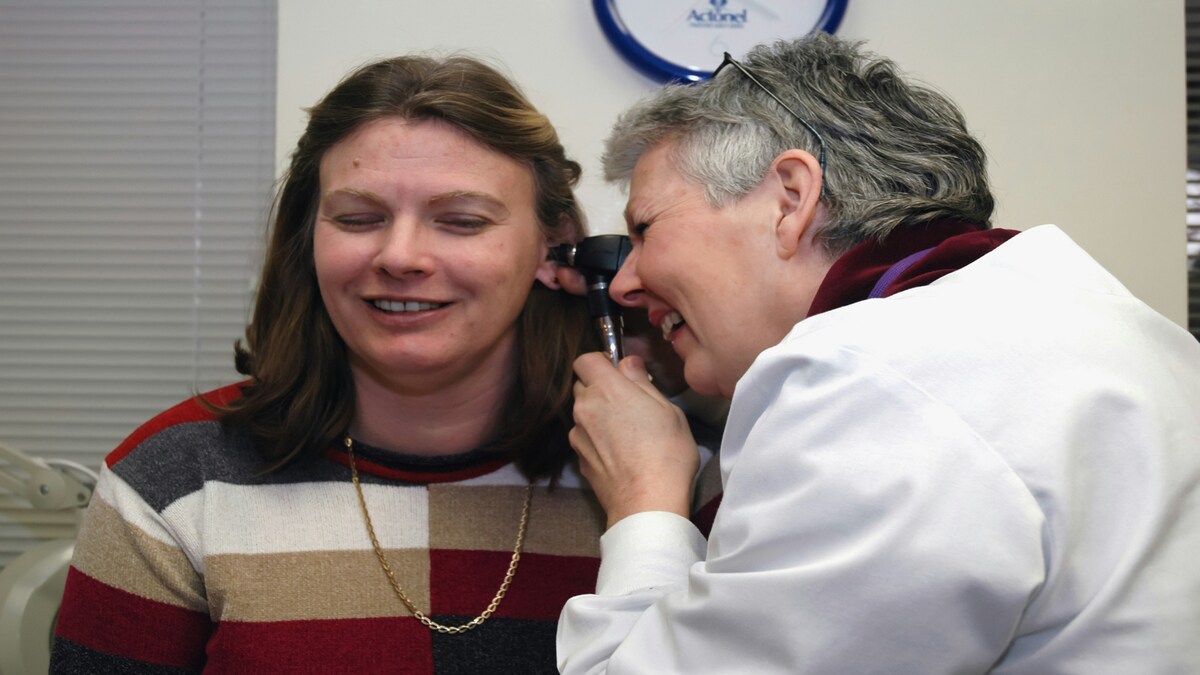
About This Article
Written by: Apex Brain & Hearing Health Editorial Team
Developed using reputable medical literature, clinical guidance, and trusted health organizations whenever appropriate.
Affiliate Disclosure: Apex Brain & Hearing Health may earn a commission if you purchase through links on this page, at no additional cost to you. As an Amazon Associate, we earn from qualifying purchases. Learn more.
Article At a Glance
- Sudden unexplained hearing loss, especially in one ear, warrants urgent medical evaluation. Sudden sensorineural hearing loss can be time-sensitive, and treatment is generally more useful when started promptly.
- Do not assume a suddenly blocked or muffled ear is simply earwax, congestion, or an infection. Ear fullness can occur with several conditions, including sudden sensorineural hearing loss.
- Tinnitus, dizziness, or vertigo can accompany sudden hearing loss. These symptoms do not diagnose the cause, but their presence should be reported during the evaluation.
- Hearing loss accompanied by facial weakness, difficulty speaking, severe imbalance, weakness or numbness, vision changes, or other new neurological symptoms requires emergency evaluation.
- Gradually developing hearing difficulty usually is not an emergency, but it still deserves appropriate evaluation.
Most hearing loss develops gradually, but some hearing changes should not wait for a routine appointment.
The most important example is a sudden, unexplained decrease in hearing.
If hearing drops suddenly over hours or a few days—particularly in one ear—prompt medical evaluation is important because sudden sensorineural hearing loss is one possible cause and treatment can be time-sensitive.
You do not need to determine whether the problem is earwax, congestion, middle-ear fluid, or inner-ear hearing loss yourself.
That distinction requires appropriate evaluation.
Sudden Hearing Loss Can Be a Medical Urgency
Sudden sensorineural hearing loss, often abbreviated SSNHL, refers to a rapid sensorineural decrease in hearing.
A commonly used research and clinical definition is a hearing reduction of at least 30 dB across three consecutive frequencies occurring within 72 hours.
That definition is useful for clinicians and researchers.
It should not be used by patients as a threshold for deciding whether to seek care.
You cannot determine at home whether your hearing has dropped by 30 dB or whether three consecutive frequencies are involved.
A sudden unexplained change in hearing should therefore be evaluated promptly even before formal testing establishes whether it meets the conventional SSNHL definition.
According to the National Institute on Deafness and Other Communication Disorders, sudden deafness should be considered a medical emergency, and delaying diagnosis and treatment may reduce treatment effectiveness.
What Sudden Sensorineural Hearing Loss Can Feel Like
SSNHL commonly affects one ear, although other patterns can occur.
Some people notice the change immediately. Others discover it when they wake up, use a telephone, cover one ear, or suddenly realize that sounds are markedly different between the two sides.
Possible symptoms include:
- A sudden reduction in hearing in one ear
- Sounds becoming unexpectedly muffled or distorted
- A feeling of fullness or pressure in the affected ear
- New tinnitus occurring with the hearing change
- Dizziness or vertigo
- Difficulty understanding speech through the affected ear
None of these symptoms by itself proves that SSNHL is present.
Earwax, middle-ear fluid, infection, eardrum problems, and other conditions can also cause sudden or noticeable hearing changes.
The important point is that a person generally cannot distinguish conductive hearing loss from sensorineural hearing loss based on the sensation alone.
Do Not Assume a Full or Blocked Ear Is Just Congestion
One reason sudden sensorineural hearing loss can be missed is that the affected ear may feel plugged or full.
That sensation can resemble:
- Earwax blockage
- Pressure after flying
- Middle-ear fluid
- Congestion associated with an upper respiratory illness
Those conditions are common and often less urgent.
However, fullness does not rule out an inner-ear hearing problem.
If the hearing change itself was sudden and unexplained, obtaining timely evaluation is safer than assuming congestion is responsible.
Which Hearing Symptoms Need Urgent Evaluation?
Seek prompt medical evaluation for a sudden or rapidly developing unexplained decrease in hearing.
Particular concern is warranted when the change:
- Develops over hours or within a few days
- Is clearly different between the ears
- Occurs without an obvious explanation
- Is accompanied by new tinnitus
- Is accompanied by dizziness or vertigo
- Occurs after significant head or ear trauma
- Is associated with severe ear pain, drainage, bleeding, or another acute ear problem
These findings can have different causes and do not all indicate SSNHL.
They do indicate that simply waiting weeks for a routine hearing-aid evaluation may not be appropriate.
When Hearing Loss Requires Emergency Care
Some combinations of symptoms raise concern for neurological or other serious medical conditions.
Seek emergency medical care when sudden hearing loss occurs with symptoms such as:
- Facial drooping or new facial weakness
- Weakness or numbness affecting an arm or leg
- Difficulty speaking or understanding speech
- New vision changes
- Severe difficulty walking or maintaining balance
- A sudden severe headache
- Loss of consciousness
- Other new neurological symptoms
These symptoms can occur with stroke and other neurological emergencies.
Sudden hearing loss by itself is much more commonly evaluated as an otologic problem than as proof of a stroke, but the presence of neurological warning signs changes the level of concern.
If stroke symptoms are present, emergency services are appropriate.
What About Sudden Tinnitus?
Tinnitus is the perception of sound without a corresponding external sound source.
It can begin suddenly and can occur with or without measurable hearing loss.
New tinnitus by itself is not automatically a medical emergency.
However, tinnitus deserves more urgent attention when it occurs with:
- Sudden hearing loss
- New neurological symptoms
- Severe or persistent vertigo
- Significant head injury
- Other acute ear symptoms
Tinnitus that pulses in time with the heartbeat has a different range of possible causes and may warrant medical evaluation even when hearing has not suddenly changed.
Learn more about tinnitus.
What Causes Sudden Sensorineural Hearing Loss?
In many cases, no definite cause is identified.
When no specific cause can be established after appropriate evaluation, the condition may be described as idiopathic sudden sensorineural hearing loss.
A smaller proportion of cases may be associated with identifiable conditions involving:
- Infection
- Autoimmune disease
- Trauma
- Inner-ear disorders
- Neurological or vascular conditions
- Other medical causes
Because several different conditions can produce sudden hearing changes, evaluation focuses not only on confirming the hearing loss but also on identifying findings that suggest another underlying disorder.
It is not accurate to assume that every case represents viral injury, loss of blood flow, nerve damage, or destruction of inner-ear hair cells.
How Sudden Hearing Loss Is Evaluated
Evaluation commonly begins with a history and examination.
The clinician may ask:
- When the hearing change began
- Whether it occurred suddenly or gradually
- Whether one or both ears are affected
- Whether tinnitus, vertigo, pain, drainage, or fullness is present
- Whether there was recent trauma, illness, noise exposure, or medication change
- Whether neurological symptoms are present
The ear canal and eardrum may be examined to look for obvious conductive causes such as earwax or middle-ear abnormalities.
Audiological testing is important for determining whether hearing loss is present and characterizing its type and severity.
Testing may include:
- Pure-tone air-conduction testing
- Bone-conduction testing
- Speech testing
- Tympanometry when appropriate
- Other audiological testing based on the clinical situation
A person does not need to wait for a scheduled audiogram before contacting a medical professional about a sudden unexplained hearing change.
Does Everyone With Sudden Hearing Loss Need an MRI or Blood Tests?
No.
Additional testing depends on the clinical findings.
For confirmed sudden sensorineural hearing loss, clinicians may consider evaluation for retrocochlear pathology—conditions involving structures beyond the cochlea, such as the vestibulocochlear nerve.
MRI is one method that may be used for this purpose.
Other approaches may sometimes be appropriate depending on the patient.
Routine laboratory testing or CT imaging is not automatically necessary for every person with SSNHL.
Testing should be guided by the medical history, physical examination, audiological findings, and other clinical considerations.
How Sudden Sensorineural Hearing Loss Is Treated
Corticosteroids are commonly considered in the treatment of idiopathic sudden sensorineural hearing loss.
Treatment decisions depend on factors such as:
- How recently the hearing loss began
- The degree and pattern of hearing loss
- Medical history
- Potential risks and contraindications
- Whether previous treatment has been attempted
- Patient preferences
Steroids may be administered systemically or through injections into the middle ear in appropriate circumstances.
Intratympanic steroid treatment may also be considered as salvage therapy when recovery remains incomplete after initial management.
The exact medication, dose, route, and duration are medical decisions.
Apex does not recommend attempting to obtain, start, stop, or alter corticosteroid treatment without appropriate medical supervision.
Why Prompt Evaluation Matters
Sudden sensorineural hearing loss is treated urgently because therapeutic options are time-sensitive.
Clinical guidance generally favors early recognition and treatment rather than delaying evaluation for weeks to see whether hearing returns.
However, it is misleading to describe a precise universal deadline after which recovery becomes impossible.
Recovery varies substantially among patients, and several factors may influence prognosis.
Some people experience spontaneous improvement. Some improve with treatment. Others have partial or limited recovery despite appropriate care.
The practical message is straightforward:
If you experience a sudden unexplained decrease in hearing, seek medical evaluation promptly rather than waiting for it to resolve on its own.
What If Several Days Have Already Passed?
Do not assume it is too late to seek care.
Even when the hearing change began several days ago—or longer—medical and audiological evaluation can still be important.
Treatment options and their expected benefit may change as time passes, but a patient should not decide that evaluation is pointless simply because the first 24 or 48 hours have passed.
A clinician can determine what evaluation and treatment remain appropriate.
Gradual Hearing Loss Is Different
Many common hearing losses develop gradually over months or years.
Possible signs include:
- Increasing difficulty understanding conversation
- Frequently asking for repetition
- Difficulty hearing in background noise
- Increasing television or media volume
- Finding some voices harder to understand
- Difficulty using the telephone
- Family members noticing communication changes
Gradual hearing loss generally does not require emergency evaluation unless another acute symptom is present.
However, persistent hearing difficulty still deserves appropriate assessment.
Gradual hearing loss can be unilateral, bilateral, symmetrical, or asymmetrical depending on the cause.
Learn more about how to know if you may be losing your hearing.
Sudden vs. Gradual Hearing Loss
| Feature | Sudden Hearing Loss | Gradual Hearing Loss |
|---|---|---|
| Typical onset | Hours to a few days | Weeks, months, or years |
| Common pattern | Often noticeable in one ear | Pattern varies with the cause |
| Possible accompanying symptoms | Tinnitus, fullness, dizziness or vertigo | Often progressive communication difficulty |
| Recommended response | Prompt medical evaluation | Schedule appropriate hearing evaluation |
| Emergency care | Especially important when neurological or other emergency symptoms are present | Usually not required unless acute warning signs are also present |
What Should You Do if You Are Not Sure Whether the Change Was Sudden?
When the timing is unclear but hearing seems to have changed significantly over a short period, contacting a healthcare professional promptly is reasonable.
It is particularly important not to dismiss the change simply because the ear feels blocked.
A clinician can examine the ear and determine whether further audiological or medical evaluation is necessary.
If the change clearly developed gradually over a long period and there are no acute warning signs, a routine hearing evaluation is generally more appropriate.
Frequently Asked Questions
Can Sudden Hearing Loss Improve Without Treatment?
Yes, spontaneous improvement can occur.
Unfortunately, there is no reliable way for a person experiencing sudden hearing loss to know whether recovery will occur without treatment.
Because treatment can be time-sensitive, the possibility of spontaneous recovery is not a good reason to delay evaluation.
How Quickly Should Sudden Hearing Loss Be Evaluated?
Promptly.
A sudden unexplained decrease in hearing should be treated as an urgent medical problem rather than something to watch for several weeks.
Clinical guidance emphasizes early evaluation and timely consideration of treatment.
There is not a single 24- or 48-hour cutoff that determines whether treatment can still help, so people who have already experienced a delay should still seek care.
Is Sudden Hearing Loss in One Ear More Serious Than Hearing Loss in Both Ears?
Not simply because it affects one ear.
SSNHL commonly presents unilaterally, which makes a sudden difference between the ears an important warning sign.
Sudden bilateral hearing loss is less common and can have different causes, some of which may also be medically significant.
Either pattern warrants prompt evaluation when the hearing change is sudden and unexplained.
Can a Cold or Sinus Problem Cause Sudden Muffled Hearing?
Yes.
Upper respiratory illnesses can contribute to Eustachian-tube dysfunction or middle-ear fluid, which can make hearing feel muffled.
The problem is that a person cannot always distinguish that sensation from sudden sensorineural hearing loss without examination and hearing testing.
If there has been a clear sudden reduction in hearing, particularly in one ear, do not assume that a cold is the explanation.
Can Sudden Hearing Loss Be a Sign of Stroke?
Sudden hearing loss can occur in association with vascular and neurological disorders, but isolated sudden hearing loss should not automatically be interpreted as a stroke.
The situation becomes much more concerning when hearing loss occurs with new neurological symptoms such as facial weakness, limb weakness or numbness, difficulty speaking, vision changes, severe imbalance, or a sudden severe headache.
Those combinations require emergency evaluation.
Does Sudden Hearing Loss Always Cause Permanent Damage?
No.
Outcomes vary.
Some people recover substantially, while others are left with persistent hearing loss.
The degree of recovery can depend on several factors, and even prompt appropriate treatment does not guarantee full restoration of hearing.
What Happens if Hearing Does Not Recover Completely?
Persistent hearing loss can be evaluated for appropriate rehabilitation and communication support.
Depending on the hearing profile and individual needs, options may include:
- Hearing aids
- Contralateral routing or other hearing-device strategies for unilateral loss
- Assistive listening technology
- Communication strategies
- Tinnitus management when needed
- Cochlear implant evaluation in selected cases that meet current candidacy criteria
The appropriate approach depends on the degree and configuration of hearing loss, speech understanding, medical findings, and individual communication goals.
Should I Go to an Emergency Department for Sudden Hearing Loss?
The appropriate point of care depends partly on the symptoms and access to timely medical evaluation.
Sudden unexplained hearing loss warrants prompt medical attention.
If it occurs with signs of stroke, serious head injury, severe neurological symptoms, or another apparent emergency, seek emergency care immediately.
When those emergency symptoms are absent, urgent evaluation through an appropriate medical clinician or ear, nose, and throat specialist may be suitable if it can be obtained promptly.
The important point is not to postpone evaluation for a routine appointment weeks away.
The Bottom Line
Most hearing loss develops gradually, but a sudden unexplained decrease in hearing is different.
Sudden sensorineural hearing loss is a time-sensitive medical condition that can initially feel like nothing more than a blocked or muffled ear.
Because it can be difficult to distinguish from earwax, congestion, middle-ear fluid, and other causes without examination and hearing testing, a sudden hearing change should not be self-diagnosed.
Seek prompt medical evaluation when hearing drops suddenly over hours or a few days.
If the hearing change occurs with facial weakness, difficulty speaking, weakness or numbness, vision changes, severe imbalance, a sudden severe headache, or other neurological symptoms, seek emergency medical care.
The goal is not to alarm everyone who notices a hearing change.
It is to make sure a potentially time-sensitive condition is recognized early enough for appropriate evaluation and treatment.
Medical Disclaimer
Apex Brain & Hearing Health provides educational information only. Our content is not a substitute for professional medical advice, diagnosis, or treatment.
Always seek the advice of a qualified healthcare professional with questions about a medical condition, symptoms, treatment options, or changes to your health.