About This Article
Written by: Apex Brain & Hearing Health Editorial Team
Developed using reputable medical literature, clinical guidance, and trusted health organizations whenever appropriate.
Affiliate Disclosure: Apex Brain & Hearing Health may earn a commission if you purchase through links on this page, at no additional cost to you. As an Amazon Associate, we earn from qualifying purchases. Learn more.
Article At a Glance
- Vicks VapoRub is not an established treatment for tinnitus. There is no good evidence that applying it to or around the ear treats the underlying causes or mechanisms of tinnitus.
- Do not put Vicks VapoRub into the ear canal. The product is not formulated as an ear medication, and ingredients such as camphor, menthol, eucalyptus oil, and its ointment base can irritate sensitive tissues.
- Anecdotal reports of temporary relief do not prove that Vicks treats tinnitus. Tinnitus naturally fluctuates, and strong smells or skin sensations can temporarily redirect attention.
- Safer tinnitus-management options include comfortable background sound, hearing care when hearing loss is present, cognitive behavioral therapy for tinnitus-related distress, and treatment of an identifiable underlying condition when one is found.
- Sudden hearing loss, pulse-synchronous tinnitus, significant neurological symptoms, or tinnitus following serious head or neck trauma can require prompt medical evaluation.
Search online for tinnitus home remedies and you may eventually encounter an unusual suggestion: Vicks VapoRub.
Some people recommend rubbing it behind the ear, placing it around the outside of the ear, or even putting Vicks on a cotton ball or swab near the ear canal.
The idea is understandable. Tinnitus can be frustrating, and an inexpensive product already sitting in the medicine cabinet can sound appealing when someone is searching for relief.
But popularity on social media, forums, or blogs does not establish a treatment.
Vicks VapoRub is not an evidence-based tinnitus therapy, and it should not be placed inside the ear canal.
What Is Vicks VapoRub?
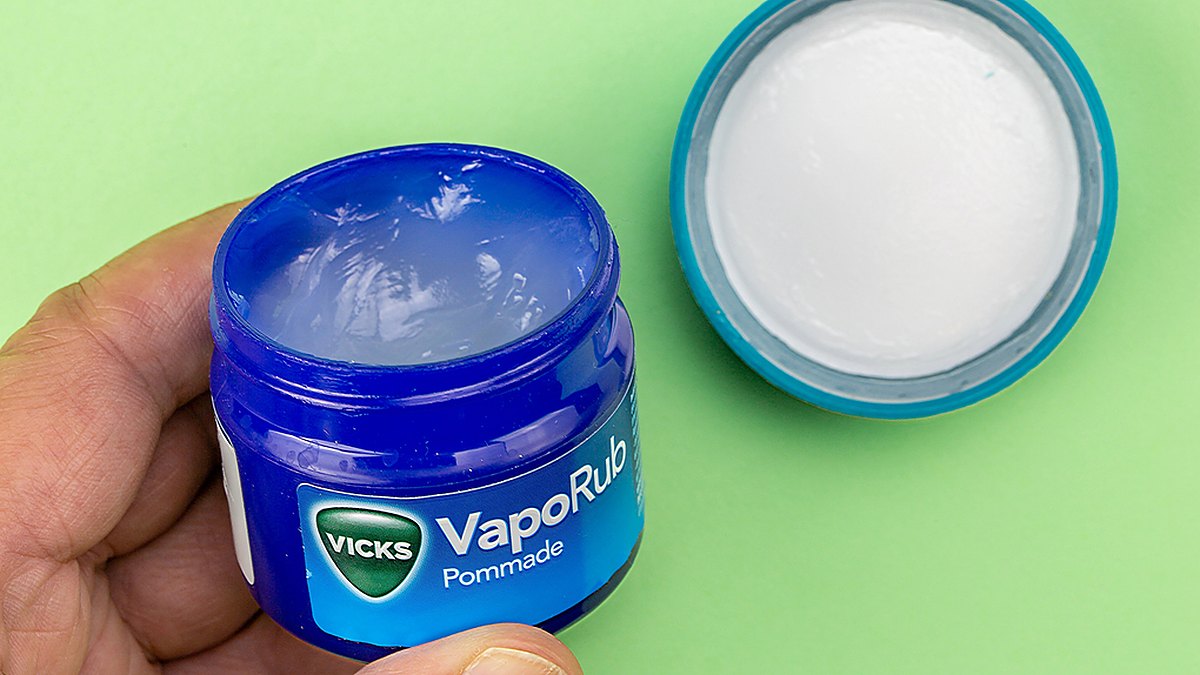
Vicks VapoRub is a topical over-the-counter product intended for uses described on its labeling.
Its familiar cooling sensation and strong aroma come from ingredients that include:
- Camphor
- Menthol
- Eucalyptus oil
The ointment also contains inactive ingredients that create its characteristic texture and scent.
None of this makes Vicks an ear medication or tinnitus treatment.
A product can be useful for its intended purpose without being appropriate for an entirely different part of the body.
Does Vicks VapoRub Help Tinnitus?
There is no good evidence establishing Vicks VapoRub as an effective treatment for tinnitus.
That includes putting it:
- Inside the ear
- At the entrance of the ear canal
- On a cotton swab inserted into the ear
- On a cotton ball placed in the ear
- Behind the ear as a supposed tinnitus treatment
Vicks is not designed to correct hearing loss, alter tinnitus-related auditory processing, treat an inner-ear disorder, or resolve the many other conditions that can sometimes contribute to tinnitus.
There is also no established mechanism showing that menthol or eucalyptus vapors can travel into the auditory system and switch off tinnitus.
Why Do Some People Say Vicks Helps Their Tinnitus?
Anecdotal reports can be convincing, particularly when many people repeat the same claim online.
But several things can make a home remedy appear to work even when it has not actually treated tinnitus.
Tinnitus Naturally Fluctuates
Tinnitus is not always equally noticeable.
It may seem louder or quieter depending on:
- The surrounding sound environment
- Attention
- Sleep
- Stress
- Mood
- Recent noise exposure
- Other individual factors
If tinnitus happens to become less intrusive after someone tries Vicks, it is easy to conclude that the product caused the change.
That conclusion may or may not be correct.
Strong Sensations Can Redirect Attention
Menthol and camphor produce noticeable sensations and a strong aroma.
For a short period, that sensory experience may draw attention away from tinnitus.
Feeling distracted from tinnitus is not the same as treating the condition responsible for it.
The same principle explains why many ordinary activities can temporarily make tinnitus less noticeable when attention becomes focused elsewhere.
Expectations Can Influence Symptoms
Expectations can influence how people perceive symptoms.
This does not mean the symptoms are imaginary.
It means that attention, expectation, emotion, and perception interact in complex ways.
Personal testimonials therefore cannot establish that Vicks has a tinnitus-specific therapeutic effect.
Can Menthol Treat Tinnitus?
Menthol produces a cooling sensation by interacting with sensory receptors.
That sensation does not establish that menthol treats the auditory mechanisms involved in tinnitus.
There is no good reason to assume that because menthol feels cooling on the skin, it can cool, calm, or repair structures inside the ear.
The inner ear is not reached by rubbing menthol on the skin surrounding the outer ear.
Can Eucalyptus Oil Treat Tinnitus?
Eucalyptus oil is another ingredient commonly associated with the characteristic smell of Vicks.
It has not been established as a treatment for tinnitus.
The fact that an aromatic ingredient can produce a strong sensation or make breathing feel different does not mean it changes tinnitus-related auditory activity.
Essential oils and other concentrated substances should also not be placed into the ear canal as improvised tinnitus treatments.
Can Camphor Treat Tinnitus?
Camphor is used in certain topical products for their intended labeled purposes.
It has not been established as a tinnitus treatment.
More importantly, camphor-containing products should be used according to their directions rather than applied to sensitive areas in ways the product was not designed for.
Why You Should Not Put Vicks in Your Ear
The ear canal is lined with sensitive skin.
Introducing an ointment containing strong aromatic ingredients into that space can create unnecessary risk without an established tinnitus benefit.
Possible problems can include:
- Skin irritation
- Burning or discomfort
- Contact reactions
- Material becoming trapped in the ear canal
- Interference with normal earwax movement
- Difficulty examining the ear until the material is removed
The risk becomes more concerning when someone has an unrecognized eardrum perforation, an active ear condition, recent ear surgery, drainage, or another problem affecting the ear.
The safest rule is simple:
Do not put Vicks VapoRub into the ear canal as a tinnitus remedy.
What About Putting Vicks Behind the Ear?
Applying Vicks behind the ear is different from inserting it into the ear canal, but there is still no good evidence that doing so treats tinnitus.
The outer skin behind the ear is separated from the inner-ear structures involved in hearing.
There is no established pathway by which rubbing Vicks behind the ear would correct hearing loss or alter tinnitus-related auditory processing.
If someone likes the aroma of menthol, that personal preference should not be confused with tinnitus treatment.
Should You Put Vicks on a Cotton Ball Near Your Ear?
This approach is also unnecessary.
A cotton ball coated with Vicks does not become an evidence-based tinnitus treatment simply because it is kept slightly outside the ear canal.
There is no established tinnitus benefit, and ointment can still accidentally enter the canal.
There are much safer ways to redirect attention from tinnitus.
Why Cotton Swabs Make the Idea Worse
Do not use a cotton swab to push Vicks or another home remedy into the ear.
Objects inserted into the ear canal can:
- Push earwax deeper
- Irritate or injure the canal
- Cause bleeding
- Damage the eardrum if inserted too far
Combining a cotton swab with an ointment adds an unnecessary substance to an already unnecessary mechanical risk.
Could Vicks Make Tinnitus Worse?
It is possible for an inappropriate ear treatment to create symptoms that make tinnitus more troublesome.
For example, irritation, blockage, discomfort, inflammation, or anxiety about an ear problem could make someone more aware of tinnitus.
That does not mean Vicks necessarily causes permanent tinnitus.
It means there is little reason to accept unnecessary risk when the product has no established tinnitus benefit.
What Should You Do If You Already Put Vicks in Your Ear?
Do not panic.
A small accidental exposure does not automatically mean serious injury has occurred.
However, do not continue inserting more product into the ear or try to remove it by pushing cotton swabs or other objects deeper into the canal.
If you develop significant:
- Pain
- Burning
- Drainage
- Hearing changes
- Dizziness
- Swelling
- Persistent irritation
seek appropriate medical advice.
A healthcare professional can examine the ear and determine whether cleaning or other treatment is necessary.
What Can You Try Instead of Vicks?
If tinnitus is bothering you right now, there are lower-risk ways to make it less intrusive.
Add Comfortable Background Sound
Tinnitus often becomes more noticeable in silence.
Try adding gentle external sound such as:
- A fan
- Quiet music
- Rain sounds
- Nature sounds
- White noise
- Pink noise
- Brown noise
The goal does not have to be completely masking tinnitus.
Reducing the contrast between tinnitus and silence may be enough to make the sound less dominant.
Learn more in our guide to sound therapy for tinnitus.
Reduce Tinnitus Monitoring
Repeatedly checking whether tinnitus is louder or quieter can keep attention locked onto it.
After using a reasonable coping strategy, return your attention to ordinary activities whenever possible.
Improvement can mean spending less time thinking about tinnitus even when some sound remains.
Address Stress
Stress does not cause every case of tinnitus, but it can make tinnitus more intrusive.
Relaxation approaches may help reduce the reaction to the sound.
Examples include:
- Slow comfortable breathing
- Mindfulness
- Progressive muscle relaxation
- Gentle physical activity
- Activities that naturally absorb your attention
These strategies should be understood as ways of managing stress and attention rather than cures for the auditory signal itself.
Address Sleep Problems
Tinnitus frequently becomes more noticeable at bedtime because the environment is quiet.
Comfortable bedside sound can help reduce that contrast.
Persistent insomnia also deserves attention because poor sleep can make tinnitus much harder to cope with.
Can Hearing Aids Help?
When tinnitus occurs alongside hearing loss, hearing aids may be useful.
They can improve:
- Speech understanding
- Communication
- Access to environmental sound
- Listening comfort
Some people also notice reduced tinnitus awareness while wearing amplification.
Hearing aids are not appropriate simply because someone has tinnitus, and they should not be presented as a universal tinnitus cure.
A hearing evaluation can help determine whether hearing loss is present.
Learn more in our complete guide to hearing aids.
What About Cognitive Behavioral Therapy?
Cognitive behavioral therapy, or CBT, is one of the better-supported approaches for reducing tinnitus-related distress.
CBT does not require tinnitus to disappear.
Instead, it can help address:
- Fear of tinnitus
- Catastrophic thinking
- Constant monitoring
- Anxiety
- Sleep-related worry
- Avoidance of normal activities
The goal is to reduce tinnitus’s control over everyday life.
What About Supplements and Other Home Remedies?
Vicks is only one of many products promoted online for tinnitus.
Other frequently discussed remedies include:
- Herbal supplements
- Vitamin combinations
- Essential oils
- Special diets
- Pressure points
- Ear drops
- Various sound devices
Be cautious when a treatment is promoted primarily through testimonials, dramatic before-and-after stories, or promises of rapid relief.
Tinnitus has many possible causes and contributors.
A single product is unlikely to address all of them.
Is There a Natural Cure for Tinnitus?
There is no natural remedy proven to cure tinnitus for everyone.
Healthy habits can support overall well-being and may make tinnitus easier to manage.
These can include:
- Protecting hearing from hazardous noise
- Getting adequate sleep
- Regular physical activity
- Managing stress
- Eating a balanced diet
- Addressing hearing difficulty
Those are useful health behaviors, but they should not be marketed as tinnitus cures.
Should You Stop Caffeine, Salt or Alcohol?
Not automatically.
People often receive broad lists of foods and drinks supposedly responsible for tinnitus.
Individual experiences vary, and tinnitus naturally fluctuates.
If you consistently notice that something appears to affect your symptoms, observe the pattern carefully rather than assuming every tinnitus fluctuation was caused by something you ate or drank.
Specific medical conditions may require individualized dietary advice.
Can Tinnitus Go Away on Its Own?
Yes, tinnitus sometimes resolves without a specific tinnitus treatment.
This can occur when tinnitus is temporary or when an underlying contributor resolves.
Other tinnitus persists.
There is no exact duration after which tinnitus can be declared permanent.
Even when the sound continues, many people experience substantial improvement in how often they notice it and how much distress it causes.
When Should Tinnitus Be Medically Evaluated?
Persistent or bothersome tinnitus can be discussed with an appropriate healthcare professional, particularly when hearing difficulty or other ear symptoms are present.
Certain patterns deserve more prompt attention.
Sudden Hearing Loss
Sudden unexplained hearing loss deserves prompt medical evaluation.
It may occur with:
- New tinnitus
- A suddenly muffled ear
- A blocked-ear sensation
- A noticeable difference between the ears
- Sometimes dizziness
Do not spend days experimenting with Vicks or other home remedies if your hearing has suddenly changed.
Learn more about hearing symptoms that may require prompt medical attention.
Pulsatile Tinnitus
Tinnitus that follows the heartbeat deserves appropriate medical evaluation.
It may sound like:
- Whooshing
- Pulsing
- Thumping
- Beating
Pulse-synchronous tinnitus can have causes different from ordinary continuous tinnitus.
Learn more in our guide to pulsatile tinnitus in one ear.
Neurological Symptoms
Seek urgent medical attention when tinnitus occurs with sudden significant neurological symptoms such as:
- Facial weakness
- New weakness or numbness
- Difficulty speaking
- Major coordination problems
- Other sudden neurological changes
After Significant Head or Neck Trauma
New tinnitus following serious head or neck trauma should be evaluated according to the severity of the injury and any accompanying symptoms.
Frequently Asked Questions
Does Vicks VapoRub cure tinnitus?
No. Vicks VapoRub has not been established as a cure or effective treatment for tinnitus.
Can I put Vicks in my ear for tinnitus?
No. Vicks is not formulated as an ear medication and should not be inserted into the ear canal as a tinnitus remedy.
Can I rub Vicks behind my ear?
Using Vicks on external skin according to its labeling is different from putting it into the ear. However, rubbing it behind the ear has not been established as a tinnitus treatment.
Does menthol help tinnitus?
Menthol creates a cooling sensation, but it has not been established as a treatment for tinnitus.
Does eucalyptus oil help tinnitus?
Eucalyptus oil has not been established as a tinnitus treatment and should not be placed into the ear canal as a home remedy.
Why do people say Vicks works?
Tinnitus fluctuates, and strong sensations can redirect attention. Expectations can also influence symptom perception. Personal experiences therefore do not establish that Vicks treats tinnitus.
What should I do if I already put Vicks in my ear?
Do not continue inserting product or try to remove it by pushing objects deeper into the canal. Significant pain, burning, drainage, hearing changes, dizziness, swelling, or persistent irritation warrant appropriate medical advice.
What can I use instead of Vicks?
Comfortable background sound, healthy sleep habits, stress management, hearing care when hearing loss is present, and CBT for significant tinnitus-related distress are more appropriate approaches.
Does white noise help tinnitus?
White noise can reduce the contrast between tinnitus and silence for some people. Other comfortable sounds such as music, rain, pink noise, or brown noise may also help.
Can hearing aids help tinnitus?
When hearing loss is present, hearing aids can improve communication and access to environmental sound. Some people also notice reduced tinnitus awareness while wearing them.
Is tinnitus permanent?
Not necessarily. Some tinnitus resolves while other tinnitus persists. Even persistent tinnitus can become much less intrusive over time.
When should I worry about tinnitus?
Prompt evaluation may be appropriate when tinnitus occurs with sudden hearing loss, significant neurological symptoms, serious head or neck trauma, or certain forms of pulse-synchronous tinnitus.
The Bottom Line
Vicks VapoRub is a familiar household product, but familiarity does not make it a tinnitus treatment.
There is no good evidence that menthol, camphor, eucalyptus oil, or the Vicks ointment itself treats the auditory processes responsible for tinnitus.
More importantly, there is no reason to place an ointment that was not designed for ear use into the ear canal.
If tinnitus is bothering you, safer strategies include comfortable background sound, addressing hearing loss when present, improving sleep, managing stress, reducing excessive tinnitus monitoring, and considering CBT when tinnitus causes significant distress.
Medical evaluation becomes particularly important when tinnitus is accompanied by sudden hearing loss, pulse-synchronous sound, neurological symptoms, or other concerning changes.
For tinnitus, Vicks belongs in the medicine cabinet—not in your ear.
Medical Disclaimer
Apex Brain & Hearing Health provides educational information only. Our content is not a substitute for professional medical advice, diagnosis, or treatment.
Always seek the advice of a qualified healthcare professional with questions about a medical condition, symptoms, treatment options, or changes to your health.