Skip to content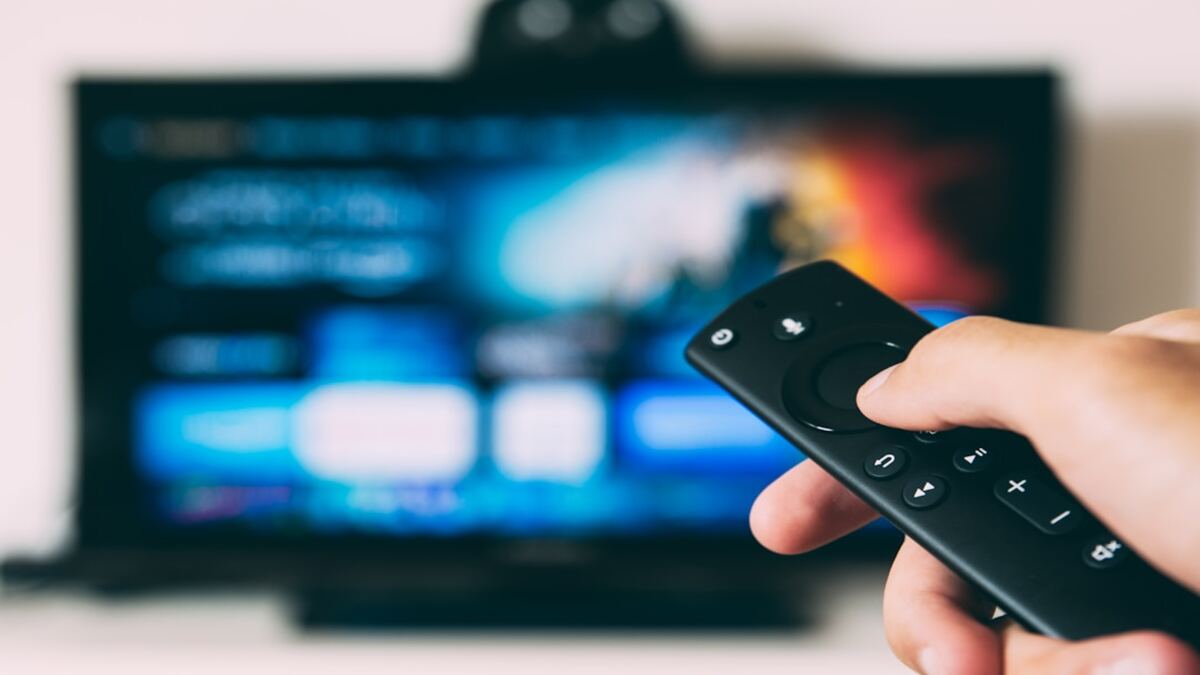
About This Article
Written by: Apex Brain & Hearing Health Editorial Team
Developed using reputable medical literature, clinical guidance, and trusted health organizations whenever appropriate.
Affiliate Disclosure: Apex Brain & Hearing Health may earn a commission if you purchase through links on this page, at no additional cost to you. As an Amazon Associate, we earn from qualifying purchases. Learn more.
Article At a Glance
- Consistently needing the television louder than other people can be a sign of hearing loss, especially if your preferred volume has increased over time.
- Hearing loss often develops gradually, which can make changes difficult to recognize at first.
- TV difficulty is only one clue. Trouble understanding speech in noise, frequent requests for repetition, unclear dialogue, and difficulty hearing certain sounds can also indicate a hearing problem.
- A hearing evaluation can determine whether measurable hearing loss is contributing. TV volume alone cannot diagnose hearing loss or identify its cause.
- Sudden unexplained hearing loss is different from gradually increasing the TV volume. A sudden change warrants prompt medical evaluation.
If you consistently need the television louder than everyone else in the room, it may be worth paying attention to your hearing.
Some people simply prefer louder television.
Room acoustics, the television’s speakers, the program’s audio mix, background noise, and differences in personal listening preference can all affect the volume people choose.
But when your preferred volume has gradually increased or family members repeatedly tell you that the television seems unusually loud, hearing loss is one possible explanation.
A hearing evaluation can determine whether measurable hearing changes are contributing.
Can Turning Up the TV Be a Sign of Hearing Loss?
Yes.
Needing more television volume can be one of the everyday ways hearing difficulty becomes noticeable.
Many forms of hearing loss develop gradually.
Instead of suddenly feeling that everything has become quiet, people may first notice that:
- Television dialogue is less clear
- Actors seem to mumble
- Background music makes speech difficult to follow
- They use captions more often
- Other people complain that the television is too loud
- Increasing the volume helps somewhat but does not completely restore clarity
These experiences can occur with hearing loss, but none is diagnostic by itself.
Why Can Hearing Loss Make Television Dialogue Unclear?
Speech contains acoustic information across a broad range of frequencies.
Vowels contribute substantially to the loudness and rhythm of speech, while many consonants contain important higher-frequency information that contributes to clarity.
Some common patterns of sensorineural hearing loss affect higher frequencies more than lower frequencies.
When this occurs, a person may hear the overall voice but miss portions of the acoustic information needed to distinguish words.
Sounds such as:
- S
- F
- TH
- SH
- T
- K
may become more difficult to distinguish depending on the hearing-loss pattern and listening environment.
Turning up the television can make the overall signal louder, but increased loudness does not necessarily restore all of the missing speech information.
This is why someone can say, “I can hear the television. I just can’t understand what they’re saying.”
Learn more about hearing sounds but not understanding words.
Why Television Can Be Difficult Even With Normal Hearing
Difficulty understanding television does not always mean hearing loss is present.
Modern television programs can contain:
- Background music
- Sound effects
- Rapid dialogue
- Quiet speech followed by loud action scenes
- Different accents
- Actors speaking away from the microphone
- Complex audio mixes
Television speakers also vary greatly in quality.
Thin flat-screen televisions may produce sound differently from external speakers or soundbars.
Room acoustics matter too.
Hard floors, high ceilings, distant seating, fans, appliances, and conversation can all make dialogue more difficult to understand.
The useful question is not simply whether you occasionally turn up the television.
It is whether your ability to understand it has meaningfully changed.
Signs Your Preferred TV Volume May Reflect Hearing Difficulty
Hearing loss becomes more worth considering when several patterns occur together.
Examples include:
- Your preferred television volume has increased over time
- Other people consistently find your preferred volume too loud
- You frequently miss dialogue even after increasing the volume
- You depend more heavily on captions than you previously did
- You also struggle with ordinary conversation
- Restaurants and group conversations have become more difficult
- You frequently ask people to repeat themselves
- You feel that people increasingly mumble
A difference in preferred volume between family members is a clue, not a hearing test.
Other Common Signs of Hearing Loss
Possible signs of hearing loss include:
- Frequently asking people to repeat themselves
- Difficulty following conversations in background noise
- Missing parts of group conversations
- Speech sounding muffled or unclear
- Difficulty understanding telephone conversations
- Difficulty hearing certain higher-pitched sounds
- Increasing television, radio, or media volume
- Family members noticing hearing changes
- Tinnitus occurring along with other hearing symptoms
No single symptom proves hearing loss.
A persistent pattern across several listening situations provides more reason to consider testing.
Learn more about the first signs of hearing loss.
What Causes Hearing Loss?
Hearing loss has many possible causes.
Age-Related Hearing Loss
Hearing loss becomes more common with advancing age.
Age-related hearing loss, often called presbycusis, reflects multiple changes involving the auditory system over time.
Genetics, cumulative noise exposure, medical conditions, medications, and other lifetime factors can contribute.
Many age-related hearing-loss patterns affect higher frequencies substantially, but there is considerable variation among individuals.
Age-related hearing loss should not simply be described as cochlear hair cells wearing out.
Hazardous Noise Exposure
Repeated or sufficiently intense sound exposure can contribute to permanent sensorineural hearing loss.
Possible sources include:
- Power tools
- Industrial equipment
- Firearms
- Loud music
- Motorsports
- Other occupational or recreational noise
Risk depends on both the sound level and the duration of exposure.
Earwax Blockage
Impacted earwax can reduce hearing by blocking sound transmission through the ear canal.
When earwax is responsible for a conductive hearing change, appropriate removal can improve hearing.
However, removing earwax does not guarantee normal hearing if another hearing disorder is also present.
Middle-Ear and Ear Disorders
Ear infections, middle-ear fluid, eardrum problems, otosclerosis, and other conditions can affect hearing.
Some are temporary or medically treatable.
Others may produce persistent hearing loss.
Medications and Medical Treatments
Certain medications and treatments can affect hearing in some circumstances.
Risk depends on the specific medication, dose, duration, route of administration, medical condition, and individual susceptibility.
Do not stop or change prescribed medication because of hearing concerns without discussing the situation with the prescribing healthcare professional.
Genetic and Medical Factors
Genetics, head or ear trauma, infections, neurological disorders, autoimmune conditions, and other medical problems can also contribute to hearing loss.
The cause cannot reliably be determined from symptoms alone.
How to Make Television Easier to Understand
Several practical changes can improve television listening whether or not hearing loss is present.
Turn On Captions
Closed captions provide visual access to dialogue.
They can be particularly helpful when speech is rapid, background music is present, or the program contains unfamiliar names or accents.
Using captions does not mean your hearing is necessarily poor.
They are simply another way to improve access to spoken information.
Look for Dialogue or Speech Settings
Some televisions and streaming devices include settings labeled:
- Dialogue enhancement
- Speech enhancement
- Clear voice
- Voice mode
These settings may change the audio mix or emphasize frequencies important for speech.
The effect varies among televisions and programs.
Reduce Background Noise
Fans, kitchen appliances, open windows, conversations, and other competing sounds can make television dialogue more difficult.
Reducing unnecessary background noise can improve the signal-to-noise ratio.
Change Your Seating Position
Moving closer to the television or speakers can improve access to the audio signal.
A direct line between the listener and speaker can also help.
Consider External Speakers or a Soundbar
External speakers can sometimes provide clearer dialogue than built-in television speakers.
The benefit depends on the television, room, speaker system, and listener.
A soundbar is not a treatment for hearing loss, but improved audio quality can make television easier to understand.
Consider Assistive Listening Technology
Personal television listening systems can transmit television audio closer to the listener.
Depending on the system, sound may be delivered through headphones, earbuds, a neckloop, hearing aids, or another personal receiver.
This can allow one person to adjust listening volume without making the television excessively loud for everyone else.
Can Hearing Aids Help With Television?
For people with appropriate hearing loss, hearing aids can improve access to speech and other sounds.
Some hearing aids can also receive television audio through compatible wireless accessories or streaming systems.
Features vary substantially among devices.
Depending on the hearing aid, available technology may include:
- Directional microphones
- Noise-reduction processing
- Multiple listening programs
- Bluetooth or other wireless connectivity
- Compatibility with television streaming accessories
Not every hearing aid includes every feature.
Hearing aids also do not guarantee perfect television understanding.
Benefit depends on the hearing-loss pattern, speech-recognition ability, device fitting, television audio, room acoustics, and other factors.
Learn more in our complete guide to hearing aids.
When Should You Have Your Hearing Tested?
There is no single age or testing interval appropriate for every adult.
A hearing evaluation is reasonable when:
- Your preferred television volume has noticeably increased
- You consistently struggle to understand dialogue
- You frequently ask people to repeat themselves
- Background noise makes conversation substantially more difficult
- Family members notice a change in your hearing
- One ear seems meaningfully different from the other
- You have persistent tinnitus or other hearing-related symptoms
- You have significant occupational or recreational noise exposure
Some people also choose to obtain a baseline hearing evaluation even before major communication difficulty develops.
The appropriate timing for repeat testing depends on age, symptoms, risk factors, previous results, and professional recommendations.
What Happens During a Hearing Evaluation?
A hearing evaluation can include:
- A review of hearing and medical history
- Examination of the ear canals and eardrums
- Pure-tone audiometry
- Speech testing
- Middle-ear testing when appropriate
- Additional tests based on symptoms and findings
Pure-tone audiometry measures the softest test signals a person can reliably detect across selected frequencies.
The results are displayed on an audiogram.
Speech testing provides additional information about how accurately speech is recognized under controlled conditions.
When difficulty understanding speech in background noise is the primary complaint, speech-in-noise testing may also be useful.
Learn more about speech-in-noise testing.
What About Online Hearing Tests?
Online hearing tests can be useful as screening tools.
They may help identify a reason to seek further evaluation.
However, results can be affected by:
- Headphone or speaker calibration
- Device volume settings
- Background noise
- The testing environment
- The specific test design
An online screening also cannot examine the ear canal, assess middle-ear function, or perform the complete range of testing available during an in-person hearing evaluation.
An online result should therefore be treated as screening information rather than a complete diagnosis.
If an online test suggests hearing difficulty or your real-world communication problems persist despite a reassuring screening result, consider a comprehensive hearing evaluation.
Hearing Loss, Social Engagement, and Cognitive Health
Research has found associations between hearing loss and outcomes including reduced social participation, loneliness, cognitive decline, and dementia.
These associations are important, but they should not be converted into the claim that untreated hearing loss inevitably causes dementia, depression, anxiety, or social isolation.
Many biological, social, behavioral, and health factors contribute to these outcomes.
Researchers continue to investigate how hearing loss may interact with communication, social engagement, cognitive function, and overall healthy aging.
Addressing hearing difficulty can improve communication for many people and may make social participation easier.
Hearing treatment should not be presented as a guaranteed method of preventing cognitive decline.
Learn more in our Brain and Hearing Health guide.
Can Watching Television Too Loud Damage Hearing?
Potentially, if the sound exposure is sufficiently loud and prolonged.
Noise-related hearing risk depends on both sound level and exposure time.
Occupational hearing-conservation standards often use exposure limits around 85 dBA over an eight-hour workday, but this should not be interpreted as a universal boundary where sound below 85 dB is always safe and sound above 85 dB instantly causes damage.
As sound level increases, the amount of exposure time associated with lower risk becomes shorter.
Most people do not need to measure television volume routinely.
If the television is uncomfortable for other listeners or needs to be extremely loud for speech to be understood, the more useful step may be to evaluate why that volume is necessary.
Consumer smartphone sound-level apps can provide rough estimates in some situations but should not be treated as substitutes for calibrated professional sound-level measurements.
Can Earwax Make the TV Sound Quieter?
Yes.
Impacted earwax can cause conductive hearing loss and make sounds seem muffled or quieter.
Earwax is only one possible explanation.
A sudden hearing change, particularly in one ear, should not automatically be assumed to be wax.
Sudden unexplained hearing loss warrants prompt medical evaluation because sensorineural hearing loss can initially feel like a blocked or clogged ear.
Avoid inserting cotton swabs or other objects into the ear canal to remove suspected wax.
A healthcare professional can determine whether significant blockage is present and recommend appropriate removal when necessary.
What if One Ear Hears the TV Differently?
Small differences between ears can occur.
A meaningful unexplained difference in hearing deserves evaluation because several conditions can produce asymmetrical hearing loss.
An audiogram can determine whether the difference is measurable and clinically significant.
Gradual asymmetrical hearing loss may lead to additional medical evaluation depending on the pattern and associated symptoms.
A sudden difference is more urgent.
Sudden Hearing Loss Is Different
Gradually needing the television louder over months or years is different from suddenly losing hearing over hours or a few days.
Sudden sensorineural hearing loss can initially feel like:
- A blocked or clogged ear
- Suddenly muffled hearing
- A major difference between the ears
- New tinnitus
- Ear fullness
- Sometimes dizziness or vertigo
Seek prompt medical evaluation for a sudden unexplained decrease in hearing.
Do not delay evaluation simply because the ear feels blocked or because you suspect earwax.
Seek emergency medical care when sudden hearing or communication changes occur with:
- Facial weakness
- Weakness or numbness affecting an arm or leg
- Difficulty speaking or understanding language
- New vision changes
- Severe difficulty walking
- A sudden severe headache
- Loss of consciousness
- Other new neurological symptoms
Read more about hearing-loss symptoms that may require prompt medical attention.
Frequently Asked Questions
Does Needing the TV Louder Definitely Mean I Have Hearing Loss?
No.
People have different listening preferences, and television speakers, room acoustics, program audio, and background noise all influence the volume needed for comfortable listening.
Hearing loss becomes more worth considering when your preferred volume has increased over time or when television difficulty occurs alongside other communication problems.
A hearing test can determine whether measurable hearing loss is present.
Why Can I Hear the TV but Not Understand the Words?
Hearing speech and understanding speech are related but different tasks.
Some hearing-loss patterns reduce access to important speech details even when the overall voice remains audible.
Background music, poor television audio, room acoustics, attention, and other factors can also reduce clarity.
If this occurs consistently in television and everyday conversation, hearing testing may help identify the cause.
Will Turning the TV Up More Fix Hearing Loss?
No.
Increasing volume may improve audibility, but it does not correct the underlying hearing loss.
For some hearing-loss patterns, louder speech can remain unclear.
Captions, better speakers, assistive listening devices, hearing aids when appropriate, and other communication strategies may provide greater benefit than simply increasing volume.
Can Earwax Cause Me to Turn Up the TV?
Yes.
Impacted earwax can reduce hearing and make television seem quieter or less clear.
Appropriate removal may improve hearing when wax is the cause.
However, hearing difficulty should not automatically be attributed to wax, particularly when the change is sudden or significant.
Can Hearing Loss From Loud Sound Be Reversed?
Permanent noise-induced sensorineural hearing loss generally cannot be reversed with current routine medical treatment.
Reducing future hazardous noise exposure can help prevent additional avoidable noise-related injury.
Other types of hearing loss may be temporary, fluctuating, or medically treatable, depending on the cause.
A hearing evaluation helps distinguish among these possibilities.
Is Conductive Hearing Loss Always Reversible?
No.
Some conductive hearing losses improve or resolve when the underlying problem is treated, such as certain cases involving impacted earwax or middle-ear fluid.
Other conductive disorders can be persistent.
The outcome depends on the cause.
Do I Need Hearing Aids if I Keep Turning Up the TV?
Not necessarily.
First determine whether hearing loss is present and how much it affects communication.
If hearing loss is identified, hearing aids may be appropriate depending on its type, degree, speech-recognition ability, and your communication needs.
Other people may benefit from medical treatment, captions, assistive listening technology, environmental changes, or monitoring.
Are Online Hearing Tests Accurate?
Online tests can provide useful screening information, but their accuracy depends on the equipment, calibration, test design, and listening environment.
They cannot replace every part of a comprehensive hearing evaluation.
Use an online test as a screening tool rather than a definitive diagnosis.
The Bottom Line
Consistently turning the television louder than other people prefer can be a useful clue that hearing has changed.
It is not proof of hearing loss.
Television dialogue can also be difficult because of poor audio mixing, background music, room acoustics, speaker quality, competing noise, or individual listening preferences.
If your preferred volume has gradually increased and you are also missing words, asking for repetition, struggling in background noise, or noticing other hearing changes, a hearing evaluation can provide objective information.
Practical changes such as captions, dialogue-enhancement settings, quieter listening environments, external speakers, and assistive listening technology can also improve television access.
When hearing loss is present, appropriate hearing care may improve both television listening and everyday communication.
If hearing changes suddenly rather than gradually, seek prompt medical evaluation instead of simply turning up the volume.
Medical Disclaimer
Apex Brain & Hearing Health provides educational information only. Our content is not a substitute for professional medical advice, diagnosis, or treatment.
Always seek the advice of a qualified healthcare professional with questions about a medical condition, symptoms, treatment options, or changes to your health.